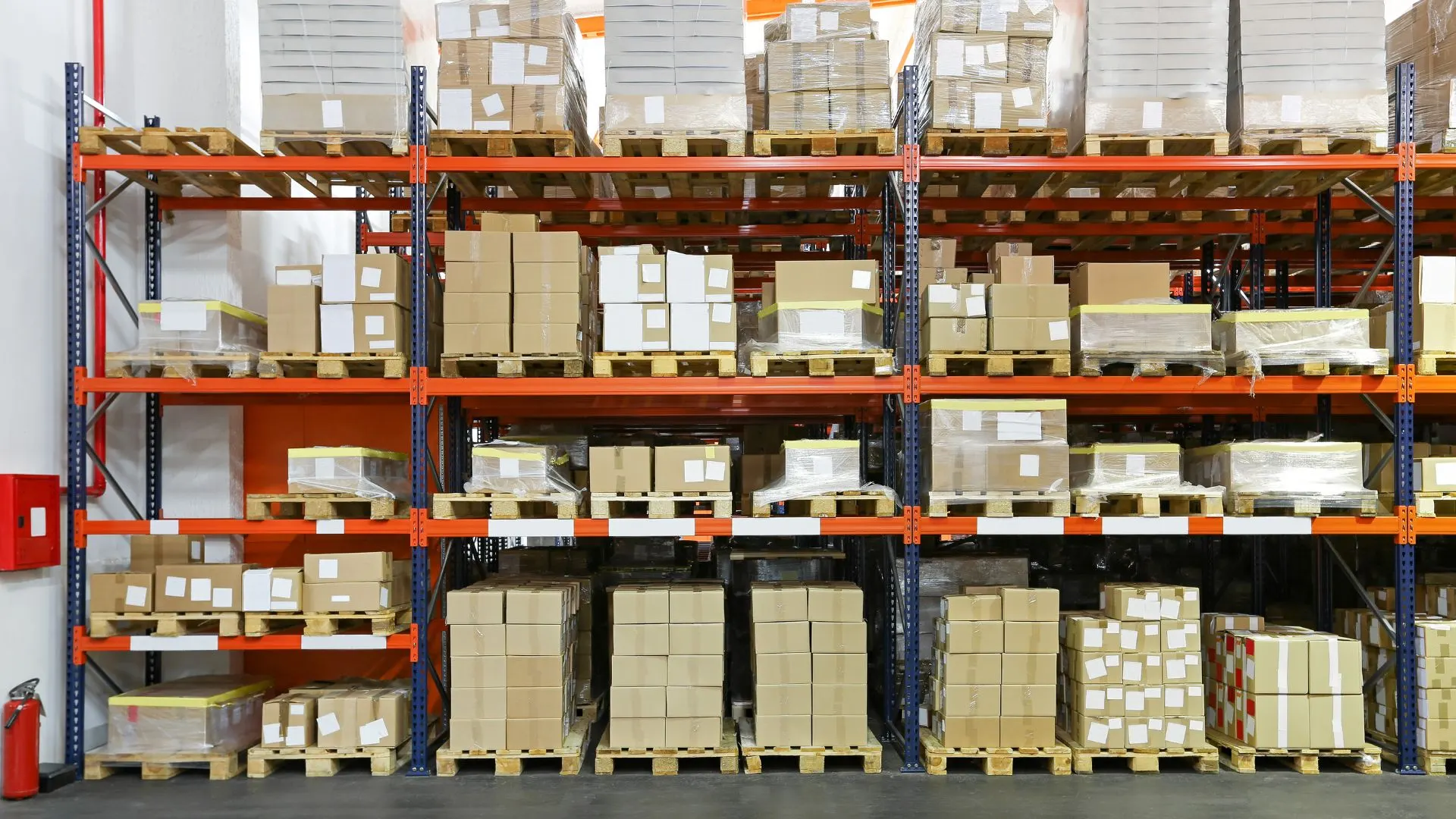
Warehouse and logistics operations across Australia face a common problem: limited floor space. When inventory grows faster than your facility’s footprint, expansion isn’t always realistic. For warehouses in Australia, especially in high-cost areas like Sydney, expanding floor space is rarely simple. Zoning restrictions, construction costs, and operational downtime make relocation or extension difficult. It can be expensive to move or extend your building, and downtime for construction can disrupt operations.
A warehouse racking mezzanine offers a practical alternative, letting businesses increase usable space vertically rather than horizontally. One of the most commonly researched solutions is a warehouse racking mezzanine, which combines pallet racking with an elevated working or storage platform. Research shows that mezzanine racking systems can provide significant storage capacity increases and operational efficiency gains without the cost and disruption of relocation or major construction work.
In Australia, these systems must meet strict racking safety guidelines and structural standards. The current benchmark is AS 4084:2023 – Steel Storage Racking Part 1 and AS 4084:2023 – Steel Storage Racking Part 2, which covers design, operation, inspection, and maintenance of pallet racking systems, including mezzanine integrations.
This article unpacks the different mezzanine types, benefits, compliance requirements, cost factors, and practical considerations for Australian warehouse operators. This article is based on independent research into Australian standards, industry publications, and guidance from professional storage system suppliers.
What Is a Warehouse Racking Mezzanine?
A warehouse racking mezzanine is a structural system that integrates pallet racking with a raised mezzanine floor. The racking frames act as the primary load-bearing structure, supporting both stored goods and the floor above. This allows businesses to create additional usable levels within the same building footprint.
According to the Australian Steel Institute, mezzanine floors are commonly used in industrial buildings to increase functional space without altering the building envelope, provided structural loads are correctly engineered and certified.
In practice, mezzanine racking systems are used for:
- Pallet storage beneath the platform
- Carton picking or shelving on the mezzanine level
- Office or packing areas above warehouse operations
- Segregation of workflows to improve efficiency
Key Components of a Mezzanine Racking System
A properly designed mezzanine racking system includes several critical elements:
- Pallet racking structure engineered to carry combined loads
- Mezzanine flooring, usually steel decking or particle board, rated for industrial use
- Staircases, handrails, and safety gates
- Load signage and compliance markings
- Fire safety and egress considerations, depending on use
According to AS 4084:2023, all racking systems in Australia must be designed to handle imposed loads and seismic considerations where applicable.
Types of Mezzanine Racking Systems
Rack‑Supported Mezzanines
These systems use existing pallet racking frames as load points for the mezzanine deck. They are cost‑effective and quick to install. Rack‑supported mezzanines are ideal for e‑commerce fulfillment centres, parts storage, and operations that need elevated picking zones.
Structural/Free‑Standing Mezzanines
Free‑standing mezzanines are independent steel constructions not reliant on racking for support. They offer wider clear spans below and higher load capacities, making them suitable for heavy equipment, manufacturing use, or overhead conveyance systems.
Shelving‑Supported Systems
These combine mezzanine platforms with long-span shelving beneath. They work well for lighter‑duty inventory and pick‑and‑pack operations where maximising floor usage matters.
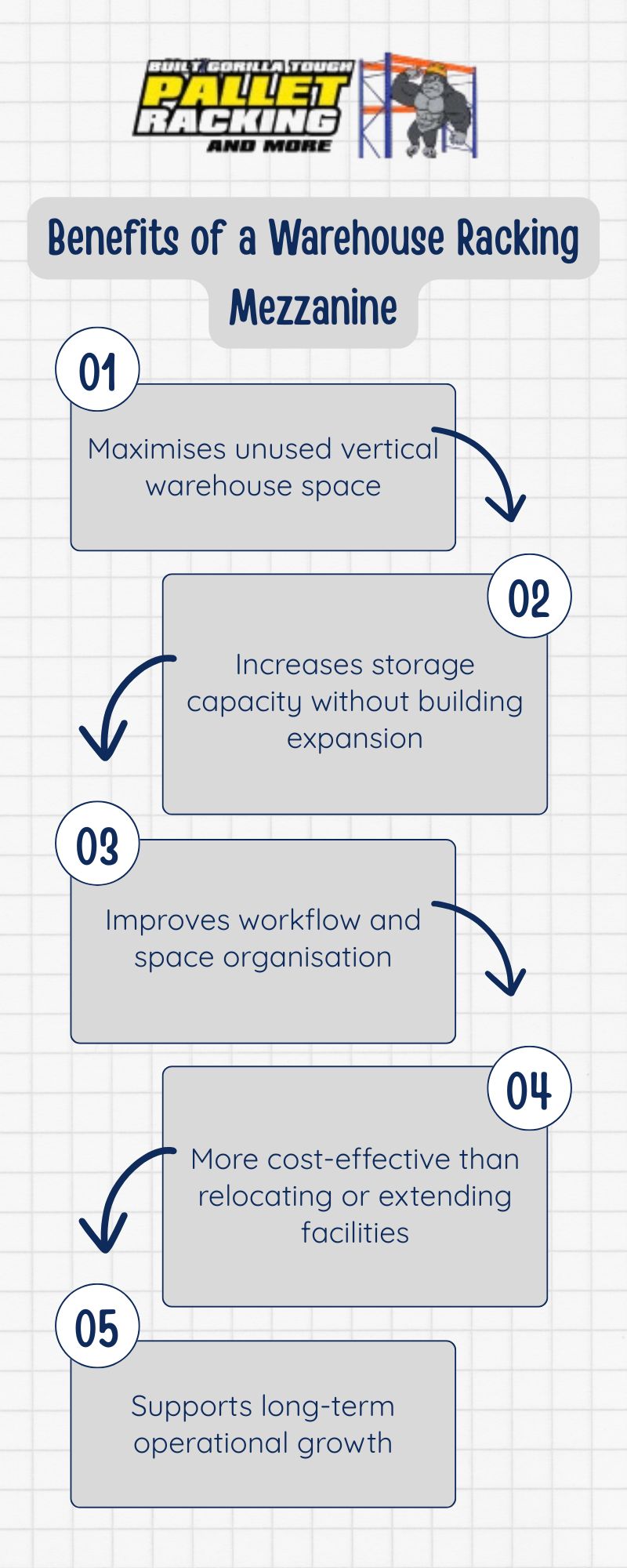
Benefits of Warehouse Racking Mezzanine
New vs Used Warehouse Racking Mezzanine Systems
Buying a used warehouse racking mezzanine can reduce upfront costs, but research and professional guidance urge caution. According to Engineers Australia, reused structural steel must be assessed for fatigue, corrosion, and compatibility with current standards.
| Factor | New Mezzanine Racking | Used Mezzanine Racking |
| AS 4084 Compliance | Fully compliant with current standards | Requires inspection and re-certification |
| Condition & Load Rating | New materials with confirmed load data | Condition and load history may be unclear |
| Design Flexibility | Custom-designed for site and workflow | Limited by existing components |
| Cost | Higher upfront investment | Lower purchase cost, possible upgrade costs |
| Risk Level | Lower when professionally installed | Higher if the documentation is incomplete |
| Best For | Long-term, high-use facilities | Budget or short-term solutions |
Where Pallet Racking Mezzanines Work Best
Based on MHD Supply Chain, mezzanine racking systems are most effective in:
- Distribution centres with high SKU counts
- Manufacturing warehouses with staged processes
- E-commerce fulfilment facilities
- Spare parts and archival storage operations
The common factor is a need for more organised storage without disrupting existing operations.
Cost Analysis for the Australian Market
Costs vary based on size, load capacity, and design complexity. Professional mezzanine suppliers give tailored quotes, but typical ranges for mezzanine floors in Sydney and NSW warehouses fall from modest custom installations to larger structural systems.
Factors affecting cost include:
- Floor area and height requirements
- Load capacities and material type
- Staircases, handrails, and access gates
- Engineering drawings and building permits
While specific cost ranges depend on project specifics, suppliers in Australia report projects from modest installations to major systems reaching into six figures.
Safety Inspection and Maintenance Requirements
Proper inspection protects staff and inventory and maintains compliance. Formal inspections by professionals should occur at least annually, with more frequent informal checks recommended during normal operations. A competent person checks for structural damage, missing hardware, out‑of‑plumb elements, and correct load usage.
Documentation from inspections helps track wear and repairs, reducing risks and supporting safety audits.
Planning Considerations Before Installation
Professional guidelines consistently highlight the importance of early planning. According to Engineers Australia, critical factors include:
- Floor slab load capacity
- Clear height and sprinkler clearance
- Fire safety and evacuation paths
- Forklift access and impact protection
- Future scalability
Safe Work Australia also recommends formal risk assessments before introducing elevated work platforms.
Conclusion
Warehouse racking mezzanine systems give Australian businesses a cost‑effective way to boost storage capacity, leverage vertical space, and improve workflows without expanding their footprint. A warehouse racking mezzanine can be a highly effective solution for Australian warehouses looking to improve storage density and operational efficiency. Research and industry guidance consistently show that success depends on proper design, compliance with AS 4084, and ongoing safety management. They can deliver sizable ROI and sustained operational improvements when designed, installed, and maintained in line with Australian Standards and building codes. Investing in expert design and compliance from the outset reduces risk and maximises long‑term value.
Need help choosing the right warehouse racking and mezzanine solution?
Selecting a compliant and well-designed warehouse racking mezzanine is essential for safety, space efficiency, and long-term performance. Pallet Racking and More provides practical guidance on pallet racking, mezzanine floors, and integrated warehouse storage solutions that align with Australian standards, including AS 4084.
Upgrade your warehouse with storage systems designed to maximise vertical space while supporting safe, efficient operations.
Related Articles
Maximizing Warehouse Efficiency: The Power of Good Pallet Racking
Heavy-Duty Galvanized Racking Systems for Industrial Storage
FAQs
Are warehouse mezzanine floors considered permanent structures?
According to Engineers Australia, mezzanine floors are typically classified as semi-permanent structures. While they can be dismantled, they must still meet structural engineering and WHS requirements.
Do mezzanine racking systems require council approval in Australia?
Approval requirements vary by council. SafeWork NSW advises that while some mezzanines may be exempt from development approval, building certification and fire compliance are often required.
How much weight can a pallet racking mezzanine support?
Load capacity depends on design, materials, and engineering calculations. AS 4084 requires documented load signage for all racking systems, including mezzanine-supported structures.
How often do mezzanine floors need safety inspections?
Formal inspections annually are required annually under AS 4084:2023. Regular informal checks help catch issues early and should be part of normal warehouse routines.