Across Australia’s retail and light industrial sectors, flexibility is critical. From boutique fashion stores to large-format hardware retailers, businesses need display systems that adapt to changing stock, promotions, and floor layouts.
Slatwall solutions remain popular because they offer modular reconfiguration without major structural work. Panels accept interchangeable hooks, shelves, and brackets, making them suitable for evolving product lines.
This article is based on extensive research of Australian building guidance, fire safety standards, materials data, and retail design studies.
What Is Slatwall?
Slatwall panels are wall-mounted boards with evenly spaced horizontal grooves designed to hold compatible display accessories. The grooves accept metal or composite inserts that support brackets, hooks, or shelving arms.
Core Materials
Most slatwall storage panels in Australia are manufactured from:
- MDF (Medium Density Fibreboard)
- Melamine-laminated MDF
- Aluminium extrusions
- PVC or moisture-resistant composites
- Timber veneer over engineered substrate
MDF is widely used due to its uniform density and machinability. MDF provides dimensional stability when manufactured to standard specifications.
Decorative vs Structural Slatwall
Decorative slatwall may prioritise aesthetics and lighter retail goods. Structural or heavy duty slatwall panels typically include aluminium inserts and engineered fixings for higher load performance. Without reinforcement, MDF slots can fatigue under repeated stress. Professional installers recommend specifying tested load ratings rather than relying on visual similarity.
How Slatwall Load-Bearing Works
The grooves in slatwall panels are precision-machined to accept T-shaped or hook-style inserts. Heavy-duty Slatwall systems often incorporate aluminium channel inserts within each groove to distribute load more evenly and reduce edge breakout.
Load capacity depends on:
- Panel thickness (commonly 16mm to 18mm)
- Fixing method into the substrate
- Stud spacing
- Use of aluminium inserts
- Type of accessory bracket
Wall-mounted systems must transfer loads safely into structural framing, not just plasterboard surfaces. Decorative slatwall panels without reinforcement are not equivalent to structural display systems.
Benefits of Using Slatwall in Stores
For Australian retailers and visual merchandisers, slatwall offers three primary advantages:
1. Flexibility
Accessories can be repositioned without tools. This supports seasonal campaigns and visual merchandising refresh cycles. Research on in-store merchandising published by the Shop & Display Equipment Association highlights modular display systems as key to improving product visibility and turnover.
2. Space Optimisation
Slatwall converts vertical wall space into a functional display area. Efficient use of floor space plays a major role in the profitability of small to medium retail businesses, directly influencing sales potential, customer flow, and overall operating efficiency.
3. Visual Consistency
Melamine and laminate finishes provide a clean, uniform presentation. In commercial fit-outs, consistency across display zones contributes to perceived brand quality and professionalism.
Slatwall Panels in Australia: Types and Specifications
MDF Slatwall Panels
The most common format. Typically 16mm to 18mm thick. May include aluminium inserts for reinforcement.
Melamine Slatwall
MDF core with decorative melamine surface. Offers durability and easy cleaning, common in apparel and specialty retail.
Aluminium Slatwall
Extruded aluminium systems offer high durability and moisture resistance. Suitable for heavy-duty slatwall storage in hardware or automotive environments.
Timber and Veneer Slatwall
Used in premium retail environments where aesthetic quality is critical.
PVC and Moisture-Resistant Slatwall
Appropriate for high-humidity areas. Used in humid environments or areas that require frequent cleaning. Moisture performance is an important factor when selecting materials for commercial interiors.
Fire-Rated Options
The National Construction Code (NCC) sets fire hazard property requirements for wall linings in commercial buildings. Panels may require testing under AS 5637.1:2015 group number classifications.
Slatwall Panel Sizes and Specifications
Common Australian panel dimensions include:
- 2400mm x 1200mm
- 2400mm x 900mm
Slot spacing is typically 100mm or similar increments.
Specifications vary by manufacturer. Buyers should confirm:
- Panel thickness
- Insert type
- Maximum distributed load per bracket
- Fixing method
Load ratings must reflect installation methods, not laboratory testing alone.
Slatwall Finishes, Colours, and Design Options
Finishes include:
- Solid colours (white, black, neutral tones)
- Timber-look laminates
- High-gloss melamine
- Veneer finishes
Retail design shows that using consistent material finishes helps create strong brand cohesion in commercial interior spaces. In practice, colour choice often balances merchandising contrast with overall store lighting and layout.
Slatwall Accessories and Display Hardware
Slatwall accessories shape how well the system performs. Hooks hold hanging items, shelves support products, rails manage garments or bulk stock, and custom fixtures allow tailored displays. Proper load support keeps the system safe and reliable.
Hooks and Pegs
Single or double-prong hooks. Load capacity varies significantly.
Shelves and Brackets
Glass, MDF, or metal shelves supported by slatwall brackets. Shelf depth influences leverage force on slots.
Hanging Rails and Arms
Used for garments or bulk items. Require careful load distribution.
Custom Display Fixtures
Some suppliers fabricate bespoke arms or branded display units compatible with modular slatwall storage systems.
The WorkSafe Australia guidance on managing risks in workplaces emphasises secure fixing and safe load management.
How to Choose the Right Slatwall for Your Store
Store Type and Product Weight
Lightweight fashion differs from hardware tools. Heavy products require reinforced inserts and proper substrate anchoring.
Budget and Fit-Out Scope
Standard MDF panels are cost-effective. Aluminium systems carry a higher upfront cost but offer durability.
Visual Merchandising Goals
Slatwall allows frequent layout changes. According to retail merchandising research, flexibility supports seasonal campaigns.
Durability and Maintenance Needs
High-traffic stores should prioritise reinforced systems. Professional installers advise requesting documented load testing and installation guidance.
Heavy Duty Slatwall: When Strength and Compliance Matter
Heavy-duty slatwall panels typically include aluminium inserts in every groove and thicker substrates.
Use cases include:
- Hardware stores
- Automotive parts retailers
- Back-of-house commercial areas
- Light warehouse slatwall storage
When loads exceed moderate retail weights, structural assessment may be required. Standards Australia documentation emphasises proper fastening into structural framing. Professional installation is strongly recommended when weight, compliance, or liability risk is high.
Designing Slatwall Layout for Maximum Impact
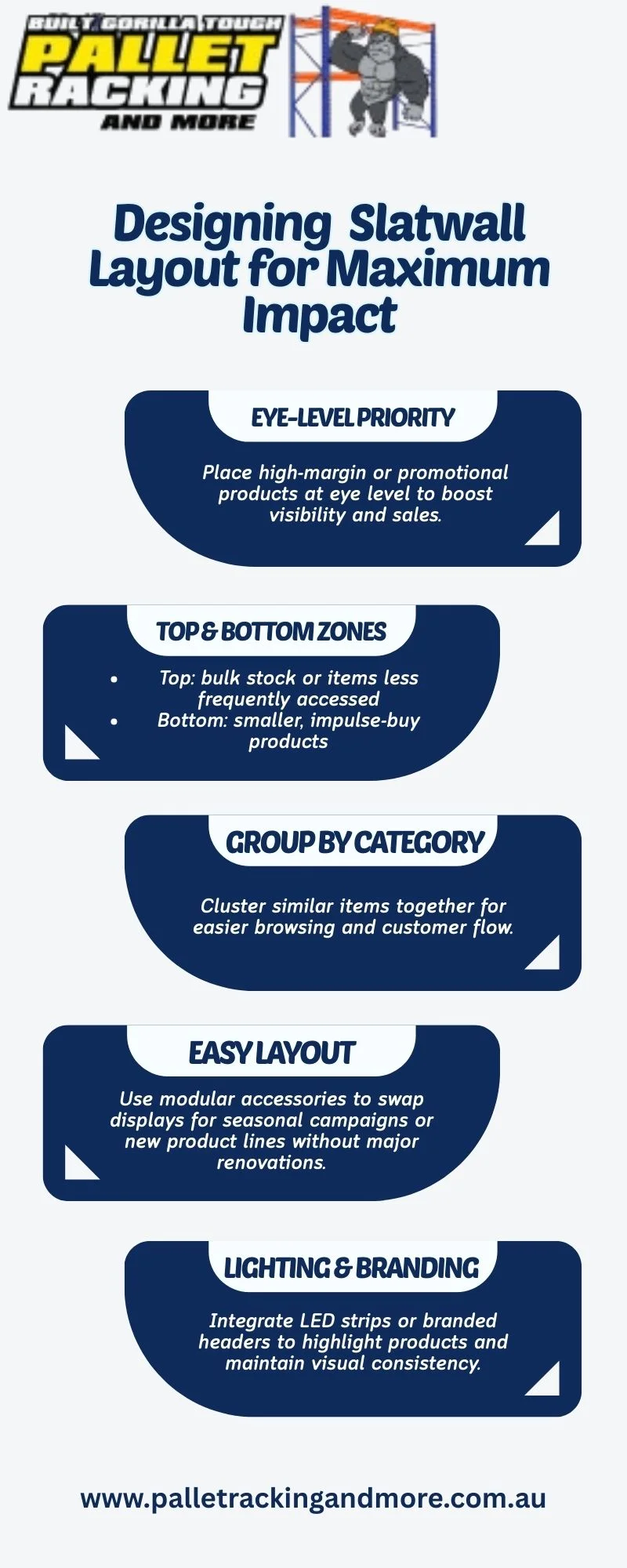
Slatwall Storage Solutions for Retail Environments
Modular slatwall storage layouts allow vertical zoning:
- High-margin items at eye level
- Bulk stock above
- Promotional areas are easily reconfigured
When products are easy to see, customers are more likely to engage with them. Well-organised vertical displays help shoppers browse faster, compare options more easily, and stay focused, which often leads to better in-store interaction. Slatwall shelving systems also support integrated lighting and branded headers.
Warehouse Slatwall Storage: Practical Considerations
Warehouse slatwall storage differs from pallet racking.
Consider:
- Substrate strength
- Wall framing
- Load concentration
- Forklift impact risks
For heavy inventory storage, pallet racking systems engineered to Australian Standards may be more appropriate. Slatwall is typically suited to lighter tools, accessories, or picking zones rather than bulk pallet storage.
Modular Slatwall Storage Systems: Scalability and Long-Term Value
Modular slatwall storage systems provide lifecycle flexibility.
Advantages include:
- Easy reconfiguration
- Lower renovation waste
- Reusability in new premises
From a commercial buyer’s perspective, adaptability reduces long-term capital expenditure. Compared with fixed joinery, slatwall offers better scalability for evolving retail strategies.
Australian Standards, Safety, and Installation Guidance
Commercial installations must comply with:
- National Construction Code (NCC)
- Fire hazard property classifications
- Workplace safety regulations
The Australian Building Codes Board and Safe Work Australia provide regulatory frameworks.
DIY installation in commercial premises may create compliance risks. Professional installers ensure:
- Correct fixing methods
- Fire documentation compliance
- Structural suitability
Cost Factors: What Influences Slatwall Pricing in Australia
Pricing varies based on:
- Material (MDF vs aluminium)
- Insert reinforcement
- Fire-rated certification
- Installation complexity
- Accessory requirements
Heavy-duty slatwall systems cost more but may reduce replacement frequency. Buyers should compare certified load ratings rather than base panel price alone.
Conclusion
Choosing the right slatwall Australia solution is not just about aesthetics. It involves load capacity, compliance with the National Construction Code, long-term flexibility, and compatibility with your merchandising strategy. Standard MDF slatwall panels may suit lightweight retail displays, while heavy-duty slatwall systems with aluminium inserts are better for hardware, automotive, and back-of-house environments.
Australian Building Codes Board and guidance from Safe Work Australia make it clear that proper installation and documented load ratings matter in commercial settings. Buyers should always request fire classification documentation, load testing data, and clear installation specifications before committing.
If you are planning a retail fit-out or upgrading your warehouse slatwall storage, working with an experienced commercial supplier helps ensure compliance, proper load ratings, and long-term durability. For certified, commercial-grade slatwall shelving systems across Australia, visit Pallet Racking and More to explore available options and request a tailored quote for your project.
FAQs
Is slatwall strong enough for heavy retail or warehouse use?
Wall-mounted systems must be engineered for load and substrate compatibility. Heavy-duty slatwall with aluminium inserts is suitable for moderate loads, but pallet racking is recommended for heavy bulk storage.
What is the difference between standard and heavy-duty slatwall panels?
Heavy-duty panels typically include aluminium inserts and reinforced cores. Industry suppliers indicate a higher distributed load capacity when properly installed.
Does slatwall need professional installation in Australia?
While not always mandatory, Safe Work Australia guidance supports professional installation for commercial load-bearing fixtures to minimise risk.
Can slatwall be used in warehouses instead of pallet racking?
For light goods, yes. For palletised loads, engineered racking compliant with Australian Standards is generally more appropriate.