Optimising warehouse storage can feel like a puzzle, especially when dealing with high volumes of inventory. Choosing the right pallet racking solutions is key to making the most of your space, improving workflow, and maintaining safety. Whether you manage a small industrial warehouse or a large distribution centre, understanding the different pallet racking types helps you store more efficiently while keeping operations smooth.
This article is based on extensive research, consulting industry professionals, and referencing current Australian warehouse storage standards and safety guidelines. This guide breaks down the main racking systems, their benefits, and practical tips for choosing the best setup for your warehouse.
What Are Pallet Racking Systems?
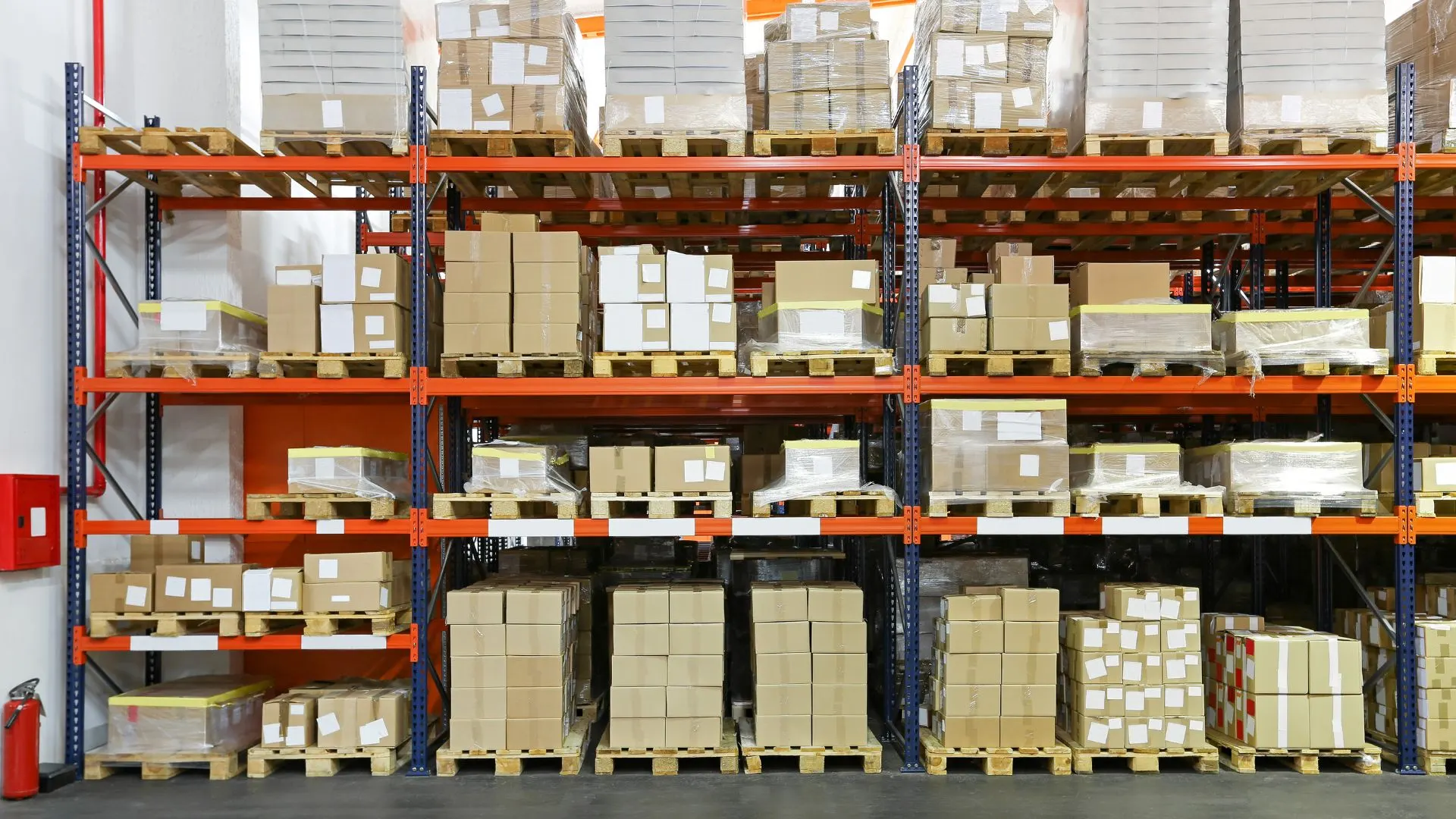
A pallet racking system is a storage framework designed to hold materials on pallets in warehouses, distribution centres, and industrial facilities. Think of it as a multi-level bookshelf for pallets, allowing forklifts and other machinery to access goods efficiently. These systems help organise inventory, maximise vertical space, and improve workflow.
Pallet racking comes in various designs to suit different storage needs, such as high-density storage, fast-moving inventory, or long, bulky items. Common features include adjustable beams, heavy-duty frames, and safety elements like guard rails and load stops. By selecting the right type, you can enhance warehouse productivity, reduce handling time, and prevent product damage. SafeWork Australia guidance emphasises that racking should be designed specifically for the size and weight of stock and maintained according to relevant Australian standards to keep operations safe and efficient.
Why Choosing the Right Pallet Racking Type Matters
Choosing the wrong pallet racking system can turn your warehouse into a logistical headache. A system designed for high-density storage might limit access to fast-moving items, while a versatile setup could waste valuable space. Matching the racking type to your inventory profile ensures efficient storage, faster order picking, and safer operations.
The right industrial pallet racking balances space utilisation with accessibility. It also minimises operational costs by reducing forklift travel times and preventing accidents caused by poorly arranged racks. According to Safe Work Tasmania’s guidance, pallet racking is classified as a high-risk structure due to load-bearing and collapse hazards if improperly designed or maintained.
Types of Pallet Racking Systems
Selective Pallet Racking
Selective pallet racking is the most common and versatile storage system, offering direct access to every pallet. Each level has adjustable beams, allowing you to store different pallet sizes without wasting space. This setup works well for warehouses handling diverse inventory with frequent turnover.
Selective racks are ideal for operations that follow a First-In-First-Out (FIFO) or Last-In-First-Out (LIFO) approach, depending on the layout. They are simple to install, maintain, and expand.
Drive-In Pallet Racking
Drive-in pallet racking are designed for high-density storage, allowing forklifts to enter the racking lanes. Drive-through racking follows a LIFO model, while drive-through enables FIFO, ideal for perishable goods.
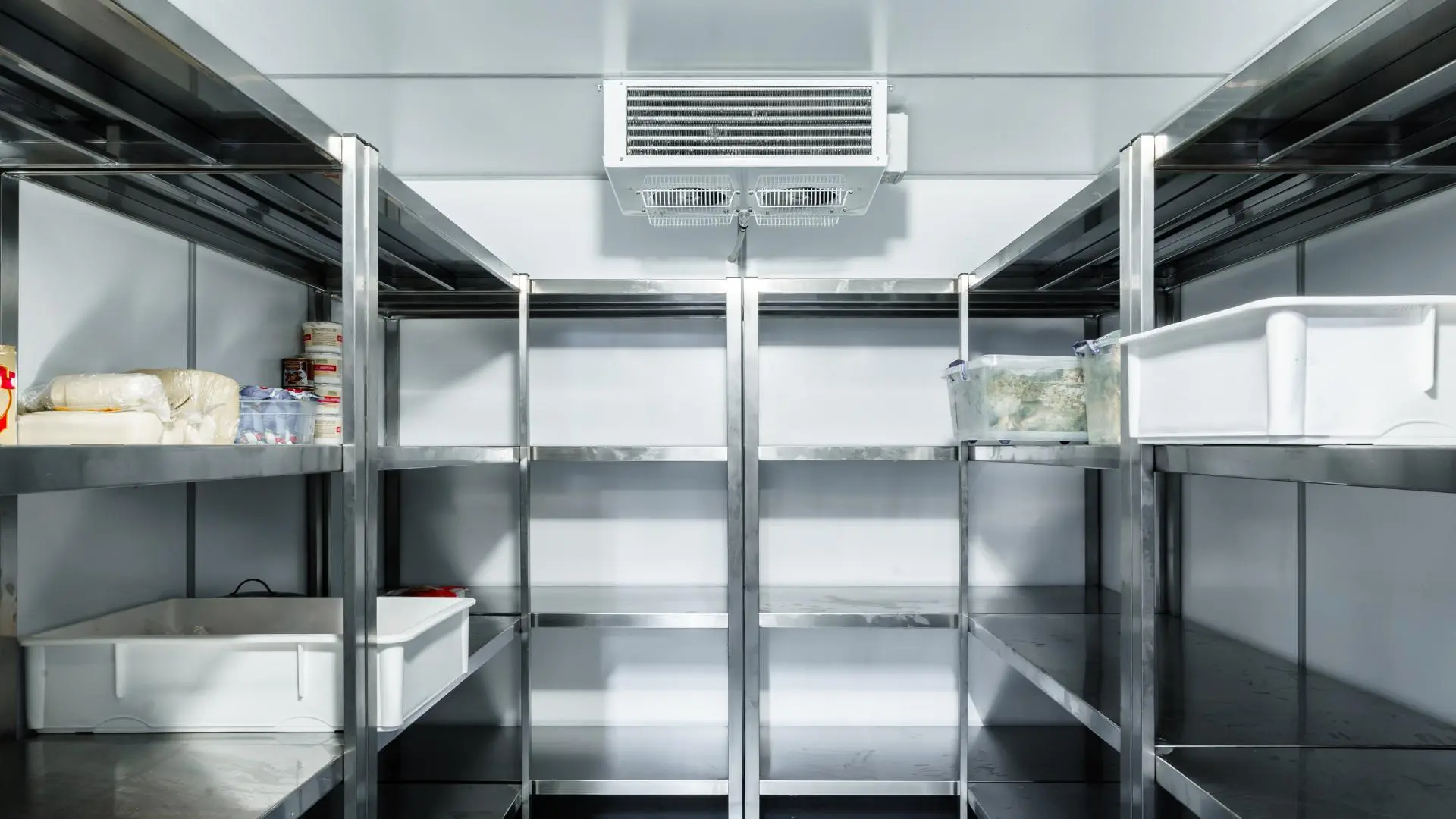
These systems maximise storage by reducing aisle space, but accessing individual pallets can take longer than selective racking. They are commonly used in cold storage and bulk storage facilities. Installation requires careful planning to maintain safety standards and prevent damage from forklift collisions.
Push Back Racking
Push back pallet racking uses carts on inclined rails, allowing multiple pallets to be stored on the same lane. When a new pallet is loaded, it pushes the others back. Picking always occurs from the front, following a LIFO principle.
This system is efficient for warehouses with moderate SKU variation and high turnover of certain products. It reduces aisle space while maintaining easier access than drive-in racking. Push back systems are flexible, cost-effective, and safer than drive-in racking because forklifts do not enter the lanes directly. They work well in cold storage and ambient warehouses, accommodating various pallet weights and sizes.
Pallet Flow (Gravity Flow) Racking
Pallet flow or gravity flow racking uses rollers on inclined tracks, allowing pallets to move automatically from the loading to the picking side. It follows a FIFO model, making it perfect for perishable items or high-turnover stock.
This system maximises efficiency by reducing forklift travel and speeding up order fulfilment. Gravity flow racks are often used in combination with selective or double deep systems, enhancing density without sacrificing accessibility.
Cantilever Racking
Cantilever racking systems are ideal for storing long, bulky items such as pipes, timber, or metal sheets. They consist of horizontal arms extending from a single vertical column, offering open-front storage for easy loading and unloading.
This system allows for flexible stacking and is suitable for warehouses with irregularly sized inventory. Cantilever racking improves material handling efficiency for long items by reducing the need for special equipment.
Cantilever racking can be single- or double-sided, adjustable, and heavy-duty, accommodating loads of several tonnes. They are often used in construction material warehouses, industrial facilities, and lumber yards.
Double Deep Pallet Racking
Double deep pallet racking stores two pallets deep on each side of the aisle, reducing aisle space and increasing storage density. It requires specialised forklifts with telescopic forks or reach trucks for loading.
This system balances accessibility and space savings, offering higher density than selective racking without the complexity of drive-in setups. Double deep racks are suitable for warehouses handling bulk items or moderately fast-moving SKUs. They work well in combination with selective racking to optimise space.
Comparison of Pallet Racking Types by Use Case
Different pallet racking systems offer unique benefits depending on your warehouse needs. The table below summarises each type’s best applications, storage density, accessibility, and ideal inventory, helping you choose the right solution for efficient and safe operations.
| Racking Type | Best For | Storage Density | Access | Ideal Inventory Type |
| Selective Pallet Racking | Versatile operations | Medium | Easy | Mixed SKUs, fast-moving |
| Drive-In/Drive-Through | Bulk storage, perishable goods | High | Moderate | Homogeneous, high volume |
| Push Back Racking | Moderate turnover, medium SKUs | High | Easy | Fast-moving products |
| Pallet Flow (Gravity Flow) | FIFO operations, perishable items | High | Easy | Perishable, high turnover |
| Cantilever Racking | Long or bulky items | Low | Easy | Pipes, timber, metal |
| Double Deep Pallet Racking | High-density storage, moderate SKUs | High | Moderate | Bulk items, consistent SKUs |
Benefits of Different Pallet Racking Types
- Maximised Storage: Many systems like drive-in, push back, and double deep racking increase storage density by reducing aisle space.
- Improved Accessibility: Selective and pallet flow systems provide direct access to inventory, reducing picking time.
- Enhanced Safety: Heavy-duty pallet racking and cantilever racks support pallet racking safety by preventing collapse, reducing product damage, and protecting staff.
- Flexibility: Adjustable beams in selective and cantilever systems allow for varied pallet sizes and warehouse expansion.
- Efficient Workflow: FIFO systems like pallet flow support high turnover and minimise product spoilage.
- Cost-Effective: Reducing unnecessary aisle space or damaged inventory lowers overall warehouse costs.
Safety and Compliance Considerations for Pallet Racking
Safety is critical in any warehouse, and ensuring proper pallet racking safety is essential to comply with regulations and protect both workers and inventory. Racks should be installed on level floors and anchored properly to prevent tipping. Regular inspections help identify damaged beams, loose connections, or overloading.
Training staff on proper loading, unloading, and forklift operation minimises accidents. According to WorkSafe Victoria, warehouse incidents often occur from improper stacking or overloading of racks. Implementing weight limits, using protective barriers, and marking aisles clearly are essential precautions.
Racks should comply with standards set by AS 4084-2023 Steel Storage Racking, which outlines design, construction, and safety requirements for Australian warehouses. Fire safety, seismic stability, and accessibility for emergency exits must also be considered.
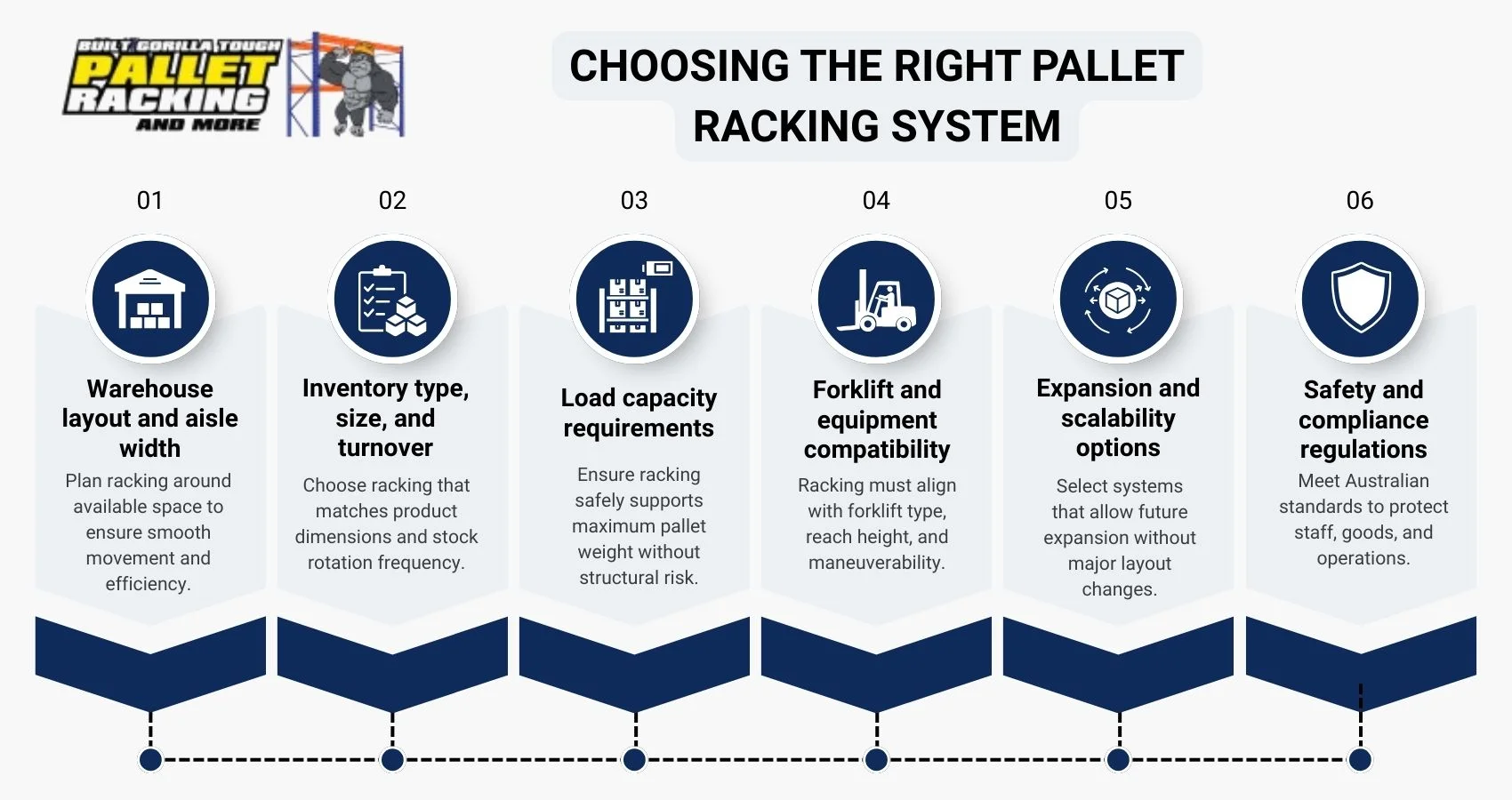
Choosing the Right Pallet Racking System
Common Mistakes When Choosing Pallet Racking Types
- Ignoring Inventory Needs: Choosing a high-density system for fast-moving SKUs can slow operations.
- Overlooking Forklift Compatibility: Racking that requires special forklifts without planning can increase costs.
- Neglecting Safety Standards: Installing racks without proper anchoring or load limits risks accidents.
- Lack of Flexibility: Fixed or non-adjustable systems can limit future expansion.
- Inadequate Planning for Aisles: Too narrow or wide aisles reduce efficiency.
- Underestimating Load Requirements: Overloading beams or racks can cause structural failure.
- Not Considering Maintenance: Some systems require more frequent checks; ignoring this leads to downtime.
Conclusion
Selecting the right pallet racking system is a critical decision for any warehouse or industrial facility. The choice affects storage efficiency, operational workflow, safety, and overall costs. By understanding the strengths and limitations of different racking types such as selective, drive-in, push back, pallet flow, cantilever, and double deep, you can match your system to inventory needs, space availability, and turnover rates.
A well-planned racking system not only maximises storage capacity but also enhances accessibility, reduces handling errors, and supports safe operations. Combining expert guidance, proper layout, and regular maintenance ensures long-term efficiency and scalability. Investing in the right racking solution not only boosts efficiency and storage capacity but also reinforces racking safety, keeping your warehouse compliant and secure.
Optimise Your Warehouse with Expert Racking Solutions
Maximising warehouse space and efficiency starts with the right pallet racking system. From selective to cantilever racks, we ensure smooth operations while maintaining full pallet racking safety and compliance with Australian standards.
At Pallet Racking and More, we provide expert guidance on design, installation, and maintenance. Our solutions help you improve workflow, boost storage capacity, and create a safe, productive warehouse environment.
Related Articles
Industrial Pallet Racks Guide for Australian Warehouses
Heavy-Duty Galvanized Racking Systems for Industrial Storage
FAQs
Which pallet racking system provides the highest storage density?
High-density systems like drive-in, drive-through, and double deep racking maximise storage by reducing aisle space. They allow more pallets in the same footprint, making them ideal for bulk storage. These systems work best for warehouses with consistent SKUs and high-volume stock.
How do I choose between FIFO and LIFO racking systems?
FIFO systems, such as pallet flow, are suited for perishable items and high-turnover stock. LIFO systems, like drive-in or push back, work well for bulk storage with less rotation. Choosing the right system helps optimise inventory flow and warehouse efficiency.
How often should pallet racking be inspected for safety?
Racks should be inspected at least annually to ensure safety and compliance. High-traffic areas or racks that frequently change loads require more frequent checks. Regular inspections prevent accidents, detect damage early, and maintain operational efficiency.
What are the main cost differences between pallet racking types?
Selective racking is generally cheaper to purchase and install due to its simple design. High-density systems like drive-in or double deep cost more upfront but save space. They can reduce long-term operational costs by maximising storage efficiency in larger warehouses.