Industrial pallet racks are the backbone of modern warehousing and logistics operations. From large manufacturing plants to fast-moving e-commerce fulfilment centres, these systems determine how efficiently goods are stored, accessed, and scaled. In Australia, rising warehouse costs and supply chain pressures have increased interest in both new and used industrial pallet racks, especially among cost-conscious operators.
This article is based on independent research into industry standards, regulatory guidance, and expert commentary. The analysis below draws from Australian Standards, professional associations, engineering guidance, and reputable industry publications to help buyers make informed decisions.
What Are Industrial Pallet Racks?
Industrial pallet racks are heavy-duty steel storage systems designed to hold palletised goods using forklifts or automated handling equipment. According to Safe Work Australia, pallet racking is classified as a high-risk structure due to load-bearing and collapse hazards if improperly designed or maintained.
The most common pallet racking industrial systems used in Australia include:
- Selective pallet racking
- Drive-in and drive-through racking
- Double-deep pallet racking
- Push-back racking
- Pallet flow systems
Each system balances space efficiency, accessibility, and cost differently, which is why system selection should always be based on operational needs rather than price alone.
Why Pallet Racks Matter in Modern Warehouses
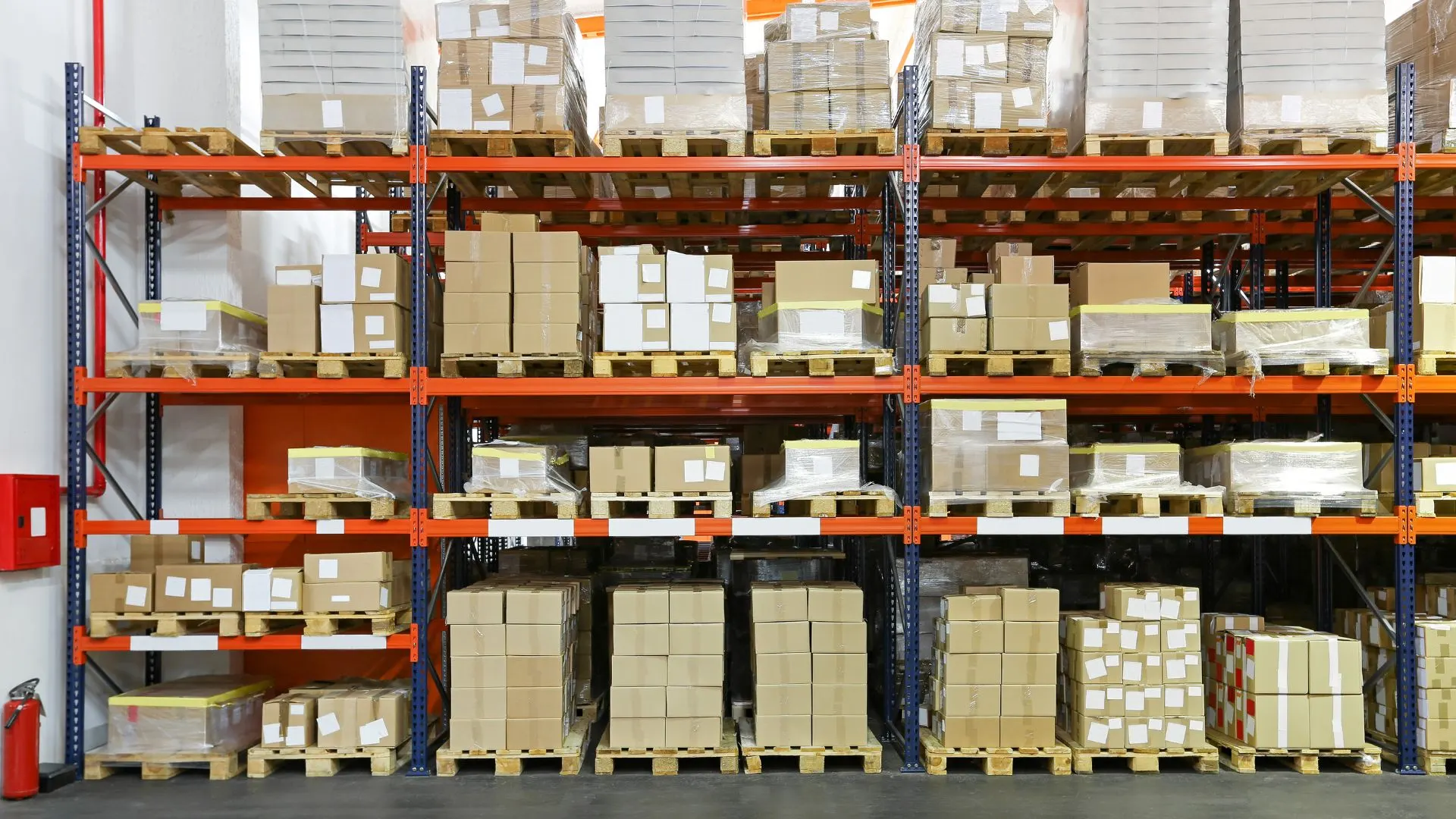
A pallet racking system is a structural framework of uprights and beams that holds palletised goods off the floor and in organised rows. This setup supports high-density storage, clearer inventory organisation and better forklift workflow compared to floor stacking.
Well-installed pallet racks help warehouses:
- Increase storage capacity without expanding footprint
- Improve picking accuracy and speed
- Reduce congestion and trip hazards
- Support inventory management systems
Space utilisation and ordered storage directly affect a facility’s throughput and labour costs. Vertical storage through racks lets operators store more goods within the same footprint, which is vital for e-commerce fulfilment, cold storage and 3PL facilities handling large volumes.
Industrial Pallet Racks and Warehouse Performance
In industrial and logistics environments, pallet racks aren’t just shelving. They influence how quickly goods are moved, how safely personnel operate, and how reliably inventory is tracked.
Vertical storage reduces travel time for material handlers, and clear aisles cut down on congestion. Dedicated rack signage showing load ratings and safe operating limits keeps staff informed and reduces the risk of overload incidents. WorkSafe Tasmania’s guidance on pallet rack use underscores visible signage of load capacities and total working loads to ensure safe handling on the warehouse floor.
This organisation-level clarity supports faster picking cycles, lower accident rates and fewer delays due to misplaced inventory.
New vs Used Industrial Pallet Racks in Australia
Choosing between new and used industrial pallet racks depends on budget, operational risk, and compliance requirements. The table below summarises the key differences to help warehouse operators make an informed decision.
| Aspect | New Industrial Pallet Racks | Used Industrial Pallet Racks |
| Upfront Cost | Higher initial investment | Lower purchase cost |
| Compliance Status | Supplied to meet AS 4084:2023 | May require re-certification |
| Load Rating Documentation | Provided by the manufacturer | Often missing or incomplete |
| Structural Condition | New, no prior wear or damage | Risk of hidden damage or fatigue |
| Inspection Requirements | Standard annual inspections | Mandatory inspection before use |
| Installation Time | Faster, with supplier support | May be delayed due to checks |
| Risk Profile | Lower safety and legal risk | Higher risk if not properly assessed |
| Insurance Acceptance | Generally straightforward | May be questioned without proof |
| Best Suited For | Long-term, high-load, automated warehouses | Short-term or budget-limited use |
Who Should Consider Used Industrial Pallet Racks?
Based on industry consensus, used racking is most suitable for:
- Short-term warehousing operations
- Standard pallet sizes with low turnover
- Budget-restricted expansions
- Temporary overflow storage
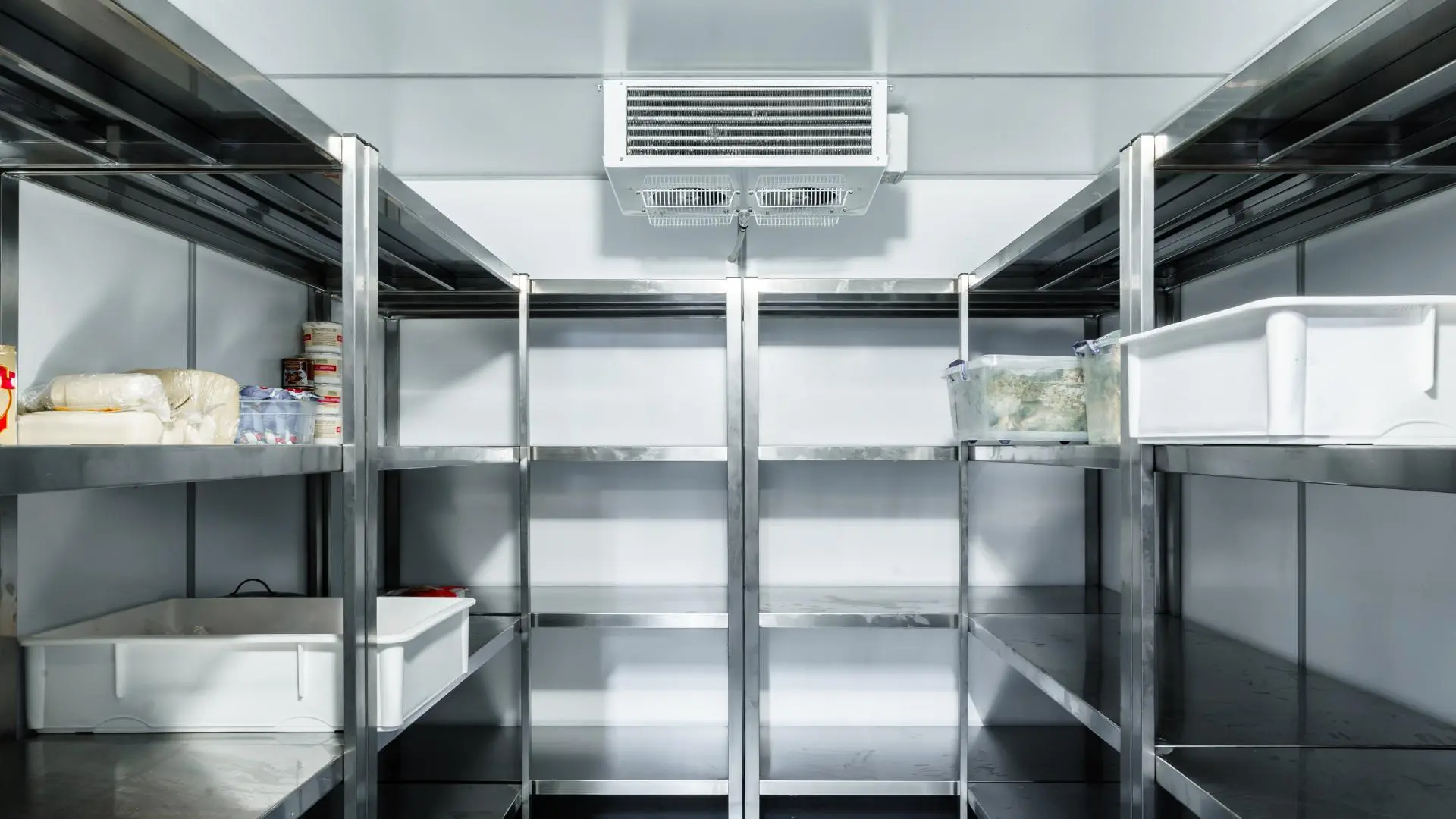
High-density, automated, cold-storage, and food-grade environments typically require new, certified systems to meet hygiene, tolerance, and compliance requirements.
When New Industrial Racking Is the Better Choice
Professional warehouse designers generally recommend new pallet racking industrial systems when:
- Storage involves high loads or seismic considerations
- Automation or narrow-aisle equipment is planned
- Long-term scalability is required
Compliance documentation is mandatory for insurance.
Safety Considerations for Industrial Pallet Racking
Australian Standards
Industrial pallet racks in Australia must meet AS 4084:2023 – Steel Storage Racking or, if installed earlier, the 2012 version of the same standard.
These standards specify:
- Structural design and load capacities
- Installation tolerances and alignment
- Beam and upright strength tests
- Clear load signage and documentation
- Regular inspection and maintenance requirements
Complying with these guidelines protects workers and goods, helps avoid regulatory penalties and supports insurance coverage. Non-compliance can put your business at risk of fines, forced operational suspension or rejection of insurance claims after an incident.
Load Capacity Management
According to SafeWork SA regulations, two critical rated capacities must never be exceeded:
- Beam level capacity: Maximum weight per individual shelf level
- Bay capacity: Total weight of all pallets stored in one bay
Professional guidelines require clear load signage displaying maximum capacities, with information provided in a visible location on the racking. As SafeWork NSW emphasises, this information should be marked clearly so workers can easily verify they’re not exceeding safe limits.
Common Safety Hazards
Industry safety experts identify these key hazards:
- Overloading beam levels or entire bays beyond rated capacity
- Forklift impacts cause structural damage to uprights or beams
- Storing goods that overhang pallets without proper clearance
- Uneven weight distribution is causing rack instability
- Missing or damaged safety components like clips and pins
Inspection Requirements
According to WorkSafe Victoria, work health and safety legislation requires regular inspections:
- Informal inspections: Daily or weekly by warehouse operators, checking for obvious damage
- Formal inspections: Annually by competent persons with experience as racking designers, engineers, or installers
- Special inspections: After any impact, reconfiguration, or relocation
Research from Australian workplace safety authorities shows that pallet racking is a major focus area due to risks from overloading and physical damage. SafeWork NSW guidelines identify common problems like beam deformation and missing safety clips, which dramatically increase collapse risk. Many warehouse operators engage professional services to conduct regular safety audits, ensuring ongoing compliance and identifying potential issues before they become serious safety hazards.
Cost Considerations and Budget Planning
The cost of industrial pallet racks in Australia varies widely based on:
- Size and height of the system
- Load capacity required
- Whether racks are new or used
- Transport and installation costs
- Inspection and compliance certification
Used industrial pallet racks can save money upfront, but you should budget for inspection, possible re-certification and any repairs required to meet standards. New racks typically come with full documentation and load signs, simplifying compliance and reducing inspection time.
For budgeting, gather multiple quotes from reputable suppliers and include costs for installation and annual inspections under AS 4084. If compliance certification isn’t included, ask for it explicitly.
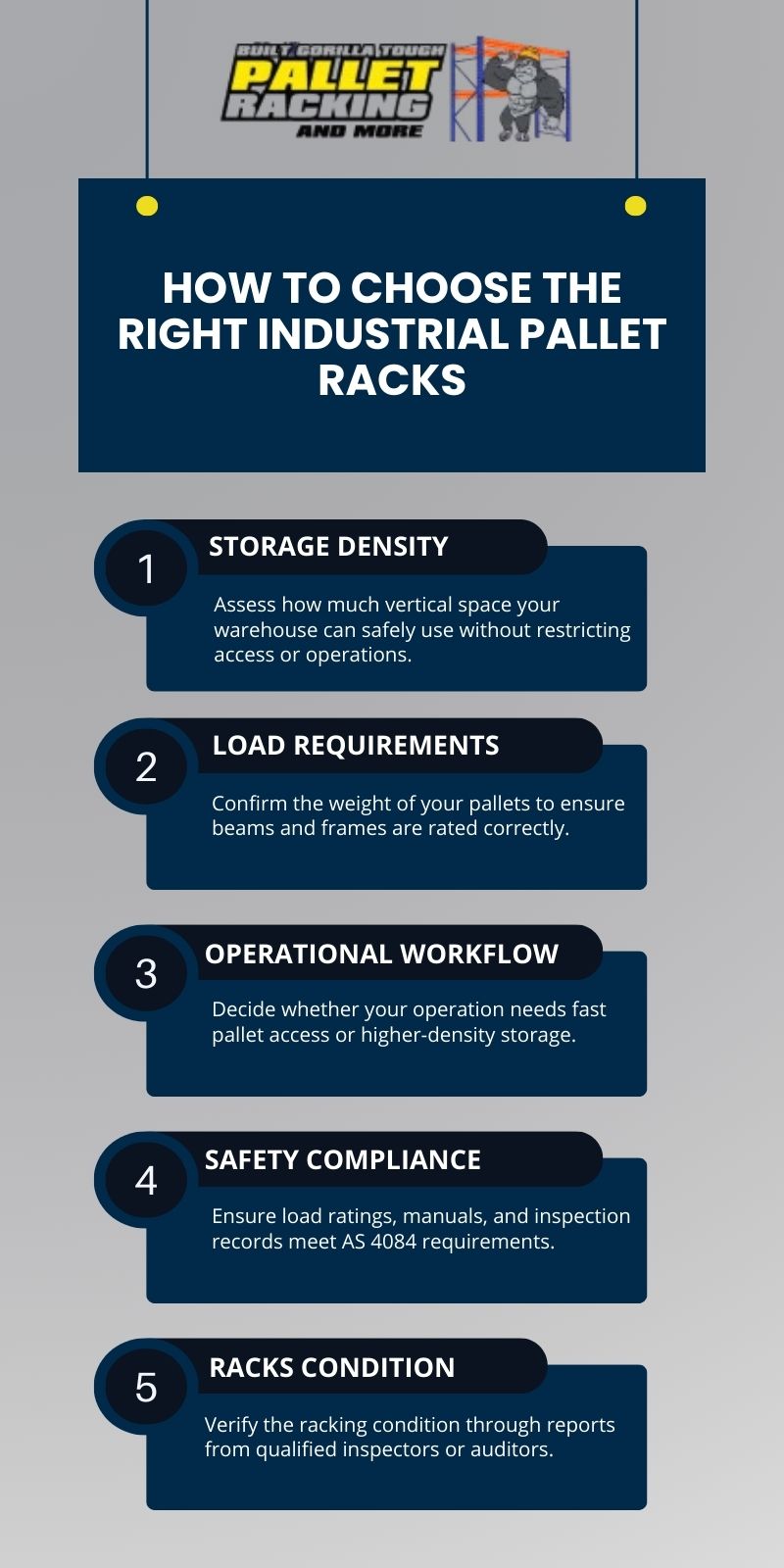
How to Choose the Right Industrial Pallet Racks
Conclusion
Industrial pallet racks are essential infrastructure for warehouse owners, logistics firms and manufacturing facilities across Australia. They support efficient storage, improve safety and help facilities comply with national standards.
Choosing the right system means balancing cost, compliance and operational needs. Whether you lean toward new systems with full certification or consider used racks with proper inspections, understanding safety guidelines and planning for ongoing audits will protect your people and your business.
Choosing the Right Industrial Pallet Racking Solution?
Selecting the right industrial pallet racks is key to safety, efficiency, and long-term warehouse performance. Whether expanding, upgrading, or setting up a new facility, professional guidance ensures compliance with Australian standards, including AS 4084.
At Pallet Racking and More, we provide expert advice on system design, installation, auditing, and maintenance. Our solutions help you maximise vertical space, improve workflow, and create a safe, productive warehouse environment.
Related Articles
Warehouse Racking Mezzanine Systems: A Complete Guide for Australian Warehouses
Heavy-Duty Galvanised Racking Systems for Industrial Storage
FAQs
How much weight can industrial pallet racks typically handle?
Load capacities depend on the rack frame, beam strengths and design. Australian standards specify testing and documentation for these numbers. Always check certified load plates on the rack or ask the supplier for documented load figures before purchase.
Are used industrial pallet racks safe to use?
They can be, if inspected and certified. Risks include hidden damage and missing documentation. Experts advise third-party audits before installation to confirm suitability.
How often should pallet racking be inspected?
Australian guidelines recommend annual inspections by a competent person, especially after any reconfiguration, relocation or damage.