Pallet rack weight capacity refers to the maximum safe load a racking system can support at beam, frame, and bay level under specified conditions. In Australian warehouses, miscalculating capacity is one of the leading causes of structural deformation and collapse.
According to the AS 4084:2023 Steel storage racking standard published by Standards Australia, racking must be designed, installed, and maintained within rated limits. Additionally, guidance from Safe Work Australia confirms employers have a legal duty to prevent overloading under WHS laws.
What Is Pallet Rack Weight Capacity?
In technical terms, pallet rack weight capacity is the engineered load limit assigned to a racking component or system under defined conditions.
It is assessed at four levels:
Frame capacity
The total vertical load an upright frame can safely support, including all beam levels and pallets.
Beam capacity
The allowable load per beam pair at a specific span. Often referred to as pallet racking beam capacity, this rating depends on beam profile, steel thickness, and deflection limits.
Bay capacity
The combined vertical load of all beam levels within one bay section.
Level load vs total system load
Level load refers to weight per beam level. Total system load accounts for all loaded levels acting on uprights and base plates.
A common compliance error in Australian facilities is confusing per-level load ratings with total frame capacity. According to WorkSafe Victoria, overloading often occurs when total bay load is not checked against upright ratings.
Understanding Pallet Racking Load Ratings
Australian racking systems use specific engineering terminology. These definitions are critical when interpreting pallet racking load capacity documentation.
Working Load Limit (WLL)
The maximum load a component is designed to carry during normal operation.
Uniformly Distributed Load (UDL)
Load evenly spread across a beam span. Most pallet racking beam capacity figures assume UDL conditions.
Safe Working Load (SWL)
Commonly used in older documentation. In modern structural standards, WLL is preferred terminology.
Maximum Unit Load
Maximum allowable weight per pallet position.
Safety Factors
Structural steel racking incorporates safety factors to account for impact, tolerances and dynamic loads. AS 4084 specifies structural performance requirements to ensure stability under service conditions.
The distinction between UDL and point loading is particularly important. Concentrated loads, uneven pallet placement, or damaged pallets can exceed structural limits even when the total weight appears compliant.
Key Components That Determine Load Capacity
Frame Load Capacity
Upright frames carry cumulative loads from all beam levels. Frame depth, steel thickness and bracing configuration determine vertical compression strength.
Beam Load Capacity
Beam span length directly affects deflection. Longer spans reduce allowable heavy-duty pallet racking capacity unless stronger sections are used.
Bay Load Capacity
Bay capacity must not exceed upright compressive limits. Even if beams are individually compliant, the bay may overload the frame.
Floor Load and Anchoring Requirements
Under Australian WHS laws, employers must ensure the structural stability of plants and structures.
Key considerations:
- Floor slab load limits
- Anchor bolts designed to manufacturer’s specification
- Base plate contact and shimming
- Proper levelling to prevent eccentric loading
Engineering guidance aligned with the National Construction Code (NCC) emphasises that slab capacity must be verified when installing high-load systems.
Pallet Type and Load Distribution
Load assumptions require:
- Maximum pallet weight
- Number of pallets per beam level
- Even weight distribution
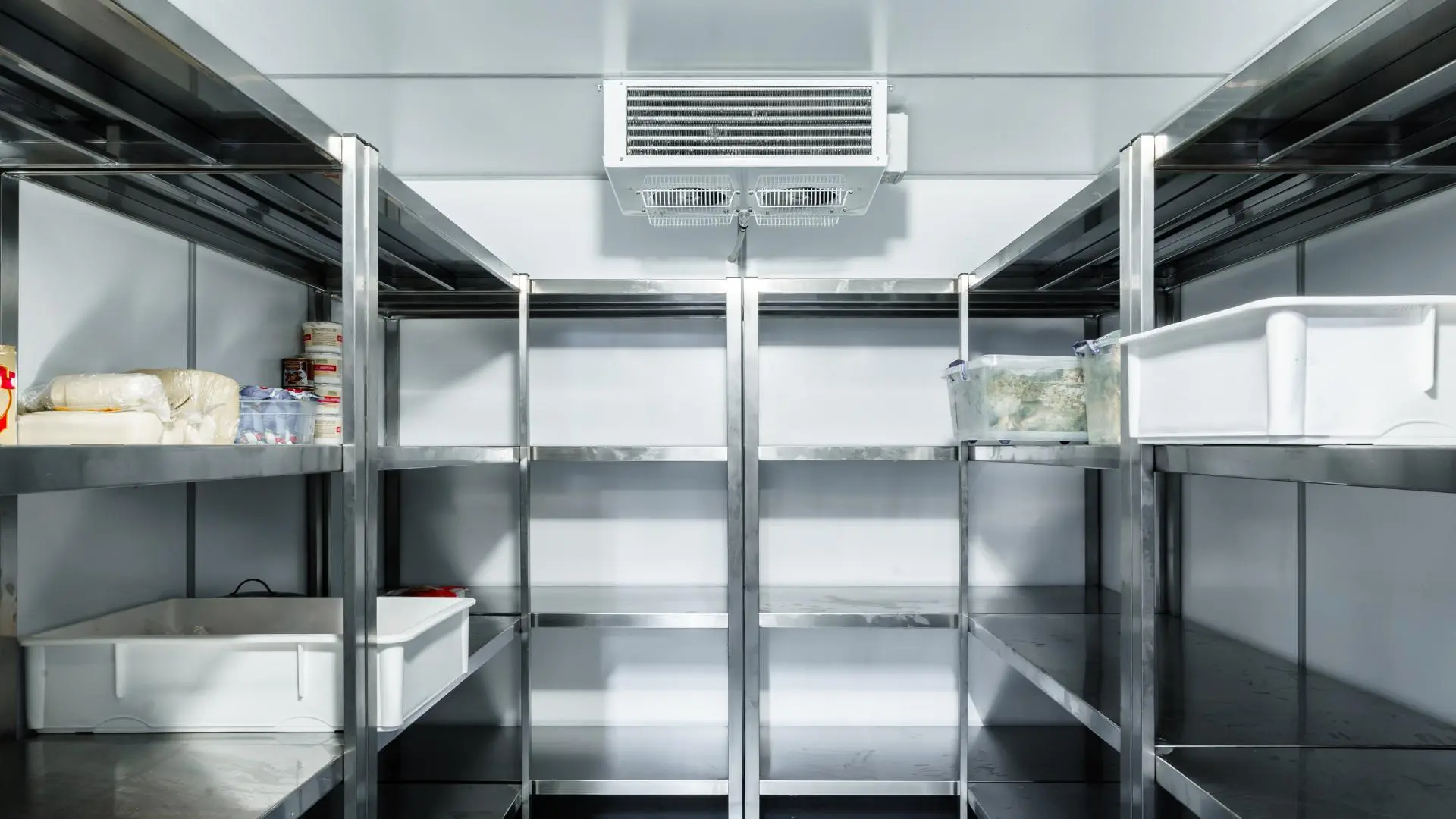
Point loads from damaged pallets can exceed beam design assumptions. For facilities using industrial cold storage shelving or mixed SKU weights, recalculation is often necessary.
Load Capacity Across Different Rack Types
Selective Pallet Racking
Common in Australian warehouses. Typical beam loads range from 1,000kg to 3,000kg per level, depending on span. Suitable for general warehousing. Selective pallet racking is suitable for general warehousing and offers the most accessible pallet positions among rack types.
Drive-In / Drive-Through Racking
Higher structural demand due to rail loads and reduced bracing. Frame capacity becomes critical. Drive-in pallet racking is designed for high-density storage and includes specific configurations and load considerations.
Cantilever Racking
Load per arm must be assessed separately from column capacity. Often used for long goods such as steel or timber. Cantilever racking is ideal for storing long or bulky items like timber and steel safely.
Heavy-Duty Pallet Racking Systems
Heavy-duty pallet racking capacity systems typically use thicker gauge steel and reinforced connectors.
These systems are common in:
- Manufacturing
- Automotive parts
- Bulk storage
According to Australian industry guidance, heavy-duty systems may exceed 4,000kg per beam level, depending on configuration. Industrial pallet racks are designed to store heavy loads efficiently and safely in warehouses. Steel gauge differences significantly impact performance. Heavier sections reduce deflection and increase longevity.
Key Pallet Rack Capacity Considerations
Checklist for warehouse managers reviewing pallet racking load capacity in Australia:
- Beam span length verified
- Upright frame strength documented
- Seismic considerations assessed (limited in most of Australia but required in some zones)
- Growth planning included
According to Safe Work Australia guidance on managing plant risks, employers must ensure plants are used within design specifications. This includes preventing overloading and maintaining structural integrity.
Future expansion planning is frequently overlooked. Increasing SKU weight or adding extra beam levels without recalculation can invalidate pallet racking load ratings. When choosing pallet racking types for your facility, review the load capacity of each system before finalising the layout.
Key Factors Affecting Rack Load Capacity
Beam Length and Section Profile
Longer spans increase deflection. Beam span and deflection limits must comply with AS 4084. Steel grade and thickness directly influence performance. Connector strength and locking pins must remain intact. Beam level spacing also impacts frame stability.
Upright Thickness and Bracing
Frames carry cumulative load. Removing bracing or altering configuration invalidates ratings.
Installation Quality
Improper installation can reduce rated capacity. Tolerance errors introduce unintended stress.
Damage and Wear
Regulators classify damage using Red/Amber/Green systems.
Common issues:
- Forklift impact
- Metal fatigue
- Corrosion
Pallet Racking Load Capacity Chart: How to Read One
Understanding a Pallet racking load capacity chart is essential.
Identifying Beam Length and Profile
Confirm beam section and exact span.
Checking Beam Level Load Ratings
Locate the UDL rating at the specified deflection limit.
Reviewing Frame Height and Depth
Taller frames reduce allowable load.
Confirming Maximum Bay Capacity
Ensure total load does not exceed upright rating.
Interpreting Manufacturer Notes and Limits
Notes often specify:
- Maximum pallet weight
- Required anchors
- Beam connector type
Common Australian errors include using charts from different beam profiles or ignoring deflection criteria.
How to Calculate Your Rack Capacity
Step-by-Step Manual Calculation
- Gather pallet weight and dimensions
- Multiply weight per pallet × pallets per level
- Determine load per beam level
- Multiply by the number of levels
- Calculate total bay load
- Compare against beam and frame ratings
- Account for safety margins
This method aligns with guidance from Australian regulators and engineering practice.
Pallet Rack Weight Capacity Calculator
A Pallet rack weight capacity calculator estimates beam load based on span and profile.
Inputs Required
- Beam length
- Beam type
- Number of pallets
- Pallet weight
How Results Are Interpreted
Calculator output must match manufacturer data.
Limitations of Online Calculators
They do not account for damage, slab limits, or configuration changes.
When to Seek Engineering Certification
- Layout modifications
- Reconfiguration
- Used racking purchase
When to Engage a Structural Engineer
Engineering sign-off is required when modifying the load configuration under AS 4084.
Used Pallet Rack Weight Capacity: Verification and Risk
The used pallet rack’s weight capacity is difficult to verify without documentation.
Risks include:
- Unknown load history
- Undocumented repairs
- Mixed components
Identifying Original Manufacturer and Specifications
Load plates must match the configuration.
Checking for Damage, Corrosion, or Repairs
Inspect welds, connectors, and bracing.
Confirming Compatibility of Mixed Components
Mixing brands may invalidate ratings.
Re-rating Used Racking Systems
Engineering reassessment may be required. In some cases, replacement is safer than recertification.
Pallet Racking Inspection Australia: Ongoing Compliance
Under AS 4084, racking systems require regular inspection. Familiarising yourself with pallet racking safety guidelines for Australian warehouses is a practical starting point for establishing a compliant inspection programme.
- Annual expert inspection
- Regular in-house checks
Inspection Frequency Guidelines
Expert inspections at least every 12 months.
What Inspectors Look For
- Upright damage
- Beam deflection
- Anchor integrity
- Load signage accuracy
Damage Classification Levels
The traffic light system is commonly used:
- Red: Immediate unload
- Amber: Monitor
- Green: Acceptable
When Engineering Assessment Is Required
Structural damage or configuration changes require review.
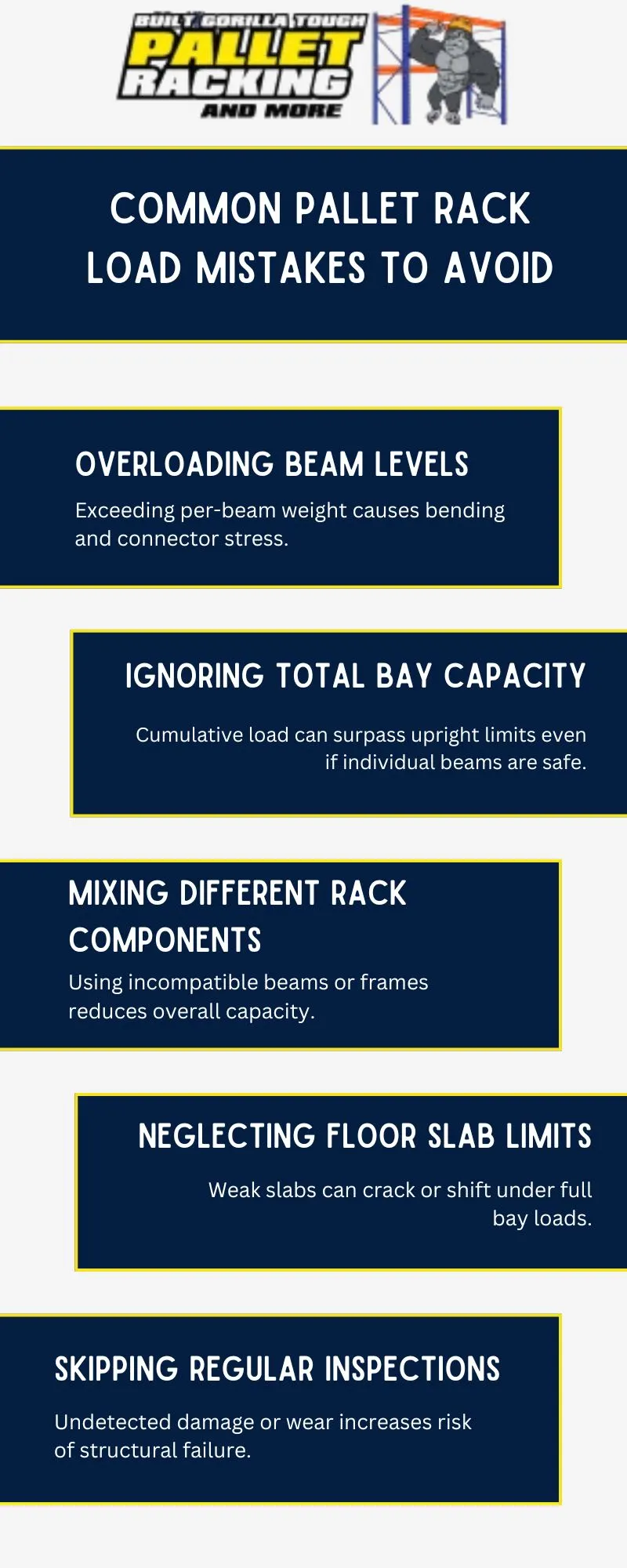
Common Pallet Rack Load Mistakes to Avoid
How to Choose the Right Pallet Rack Load Capacity for Your Facility
Selecting the correct pallet rack weight capacity comes down to four practical checks:
Assess Maximum Pallet Weight
Design for the heaviest pallet, not the average. Multiply pallet weight by pallets per level, then compare with your pallet racking beam capacity and frame rating.
Check Cumulative Bay Load
Ensure total load across all levels does not exceed upright capacity listed in your Pallet racking load capacity chart.
Factor in Operational Risk
High forklift traffic or impact exposure may require heavy-duty pallet racking capacity and upright protection.
Confirm Compliance
Verify load plates, engineering documentation and inspection records meet pallet racking load capacity requirements under AS 4084 and WHS obligations.
If modifying layout or increasing loads, seek engineering certification before implementation.
Conclusion
Ensuring correct pallet rack weight capacity is fundamental to warehouse safety, compliance and operational continuity. Exceeding pallet racking beam capacity or relying on outdated pallet racking load ratings can expose your business to structural failure and WHS penalties under Australian regulations. Every system should align with AS 4084 requirements, display accurate load plates and undergo routine pallet racking inspection Australia checks.
If you need help verifying calculations, upgrading to heavy-duty pallet racking capacity, or assessing used pallet rack weight capacity, speak with the specialists at Pallet Racking and More. Request a capacity assessment today to ensure your system meets pallet racking load capacity Australia standards.
FAQs
What affects pallet rack weight capacity?
Span length, steel thickness, frame height, bracing integrity, floor anchoring, pallet distribution, and damage condition.
Can automated storage systems use standard pallet rack capacity ratings?
Not always. Automated systems introduce dynamic loads and impact factors that typically require higher design ratings and certification.
Who is legally responsible for pallet rack overloading incidents?
Responsibility usually falls on the employer or site operator under WHS laws, not the racking manufacturer, if loads exceed rated limits.
What happens if the pallet dimensions change but the weight stays the same?
Changes in pallet size can alter load distribution and beam deflection, potentially exceeding design assumptions even at the same weight.
Can load capacity signage be customised for mixed pallet weights?
Yes. Engineers can specify conservative load plates based on worst-case pallet weights to safely accommodate mixed SKUs.