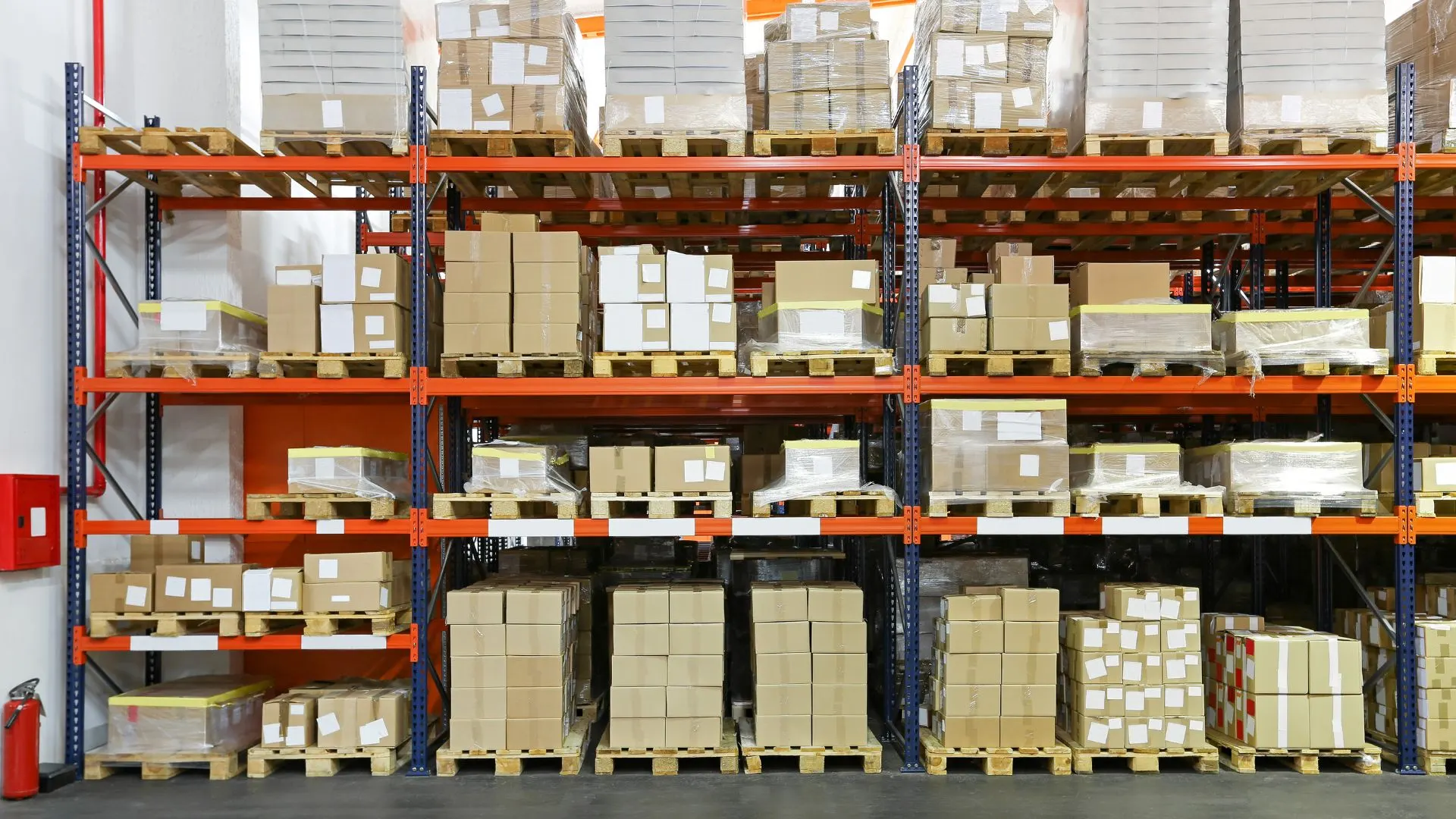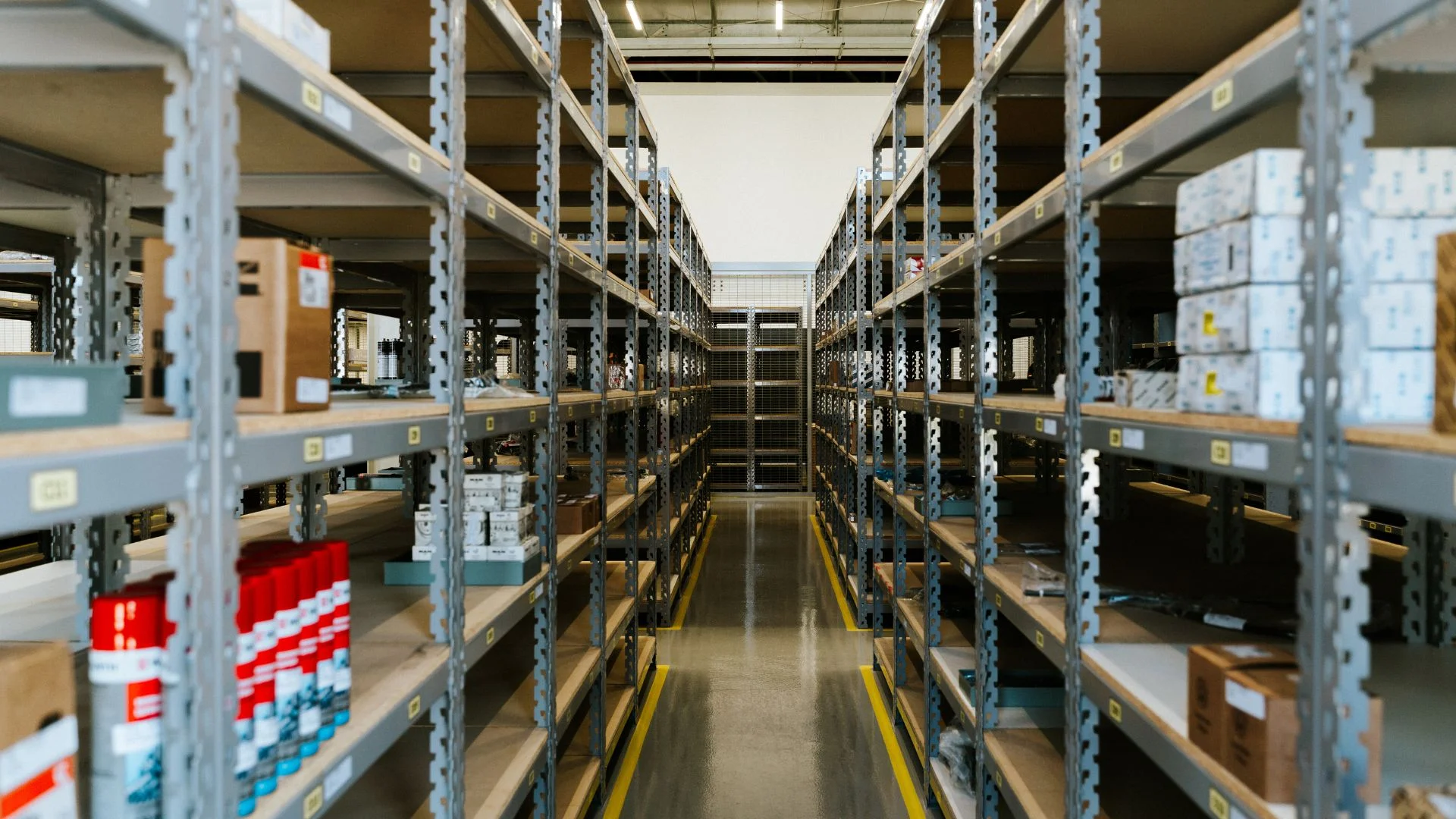
Cold storage and freezer warehouses are critical infrastructure across Australia’s food processing, meat export, pharmaceutical, retail, and third-party logistics sectors. As demand for temperature-controlled distribution grows, facilities must store more products within tighter footprints while maintaining compliance and energy efficiency. Well-designed cold storage racking systems directly influence storage density, workflow efficiency, safety, and long-term operating costs. In freezer environments, especially, layout and racking selection affect air circulation, frost formation, and power consumption.
What Are Cold Storage Racking Systems?
Cold storage racking systems are engineered storage structures designed for use in chilled and frozen environments. Their core purpose is to safely store palletised or shelved goods at low temperatures while maintaining structural integrity, accessibility, and regulatory compliance.
A typical system includes:
- Upright frames and beams
- Bracing and baseplates
- Decking or pallet supports
- Anchoring systems
- Rack protection and safety accessories
Unlike standard warehouse racking, freezer-grade systems must withstand sub-zero temperatures, high humidity, condensation, and thermal cycling. Galvanised finishes, corrosion-resistant coatings, and specialised fasteners are commonly used to mitigate rust and material brittleness.
Key industries relying on these systems include:
- Food and beverage processing
- Meat and seafood export
- Pharmaceutical and vaccine distribution
- Supermarket supply chains
- Cold-chain logistics providers
System types commonly deployed in cold rooms and freezers include pallet racking, push-back racking, drive-in and drive-through systems, cantilever racking, mobile bases, and modular shelving.
Types of Cold Storage and Freezer Racking Systems
When selecting cold storage racking systems, the configuration determines storage density, accessibility, workflow efficiency, and long-term operating cost. Below are the primary racking types used in chilled and frozen warehouses across Australia.
Selective Pallet Racking
Selective pallet racking is the most widely used system in cold storage facilities. Each pallet is directly accessible from the aisle, making it suitable for operations with high SKU diversity and fast turnover.
In freezer environments, the structure is typically manufactured from galvanised steel or treated with corrosion-resistant coatings to withstand condensation and sub-zero conditions.
Best suited for:
- Facilities requiring high selectivity
- Mixed-product cold storage
- FIFO-based operations
Trade-off: Lower storage density compared to high-density systems.
Drive-In and Drive-Through Racking
Drive-in and drive-through systems are high-density configurations commonly used in freezer warehouses. Forklifts enter the rack lanes to load pallets onto rails.
- Drive-in racking operates on a LIFO (Last-In, First-Out) basis.
- Drive-through racking allows FIFO (First-In, First-Out) with access from both ends.
These systems are widely used in frozen meat, seafood, and bulk food export facilities where pallet uniformity is high.
Double-Deep Racking
Double-deep racking stores pallets two positions deep, increasing density compared to standard selective systems. Specialised reach trucks are typically required.
This configuration is common in cold distribution centres, balancing density and accessibility.
Best suited for:
Medium-density freezer operations
Facilities seeking improved cube utilisation without moving to full high-density systems
Trade-off: Reduced pallet accessibility compared to selective racking.
Push-Back Racking
Push-back systems use nested carts on inclined rails. Loading a pallet pushes the previous one back; unloading occurs from the aisle side. This configuration offers higher density than selective racking while maintaining easier access than drive-in systems. It’s worth reviewing pallet racking safety guidelines before installation, as push-back systems involve moving mechanical components that require specific operational protocols.
Best suited for:
- Medium-to-high density storage
- Operations needing lane-level product separation
Trade-off: Typically operates on LIFO.
Pallet Shuttle Systems
Pallet shuttle systems use a motorised shuttle to transport pallets within deep rack lanes. The forklift loads the pallet at the aisle entrance, and the shuttle moves it into position. These systems are increasingly adopted in high-volume freezer warehouse optimisation projects because they reduce forklift travel time inside cold zones and improve productivity.
Best suited for:
- Very high-density freezers
- High-volume, uniform pallet loads
Trade-off: Higher capital investment and need for pallet standardisation.
Mobile Racking Systems
Mobile racking consists of racks mounted on powered bases that move laterally to open access aisles only when needed. This system significantly increases storage density by eliminating multiple static aisles.
Best suited for:
- Cold stores with limited floor space
- Facilities where density is more important than constant multi-aisle access
Trade-off: Higher installation cost and reliance on mechanical systems.
Pallet Flow Racking (Gravity Flow)
Pallet flow systems use rollers or wheels on an inclined rack structure, allowing pallets to move forward by gravity. These are typically configured for FIFO inventory rotation. They are often used in temperature-controlled distribution environments where strict stock rotation is required, such as perishable food storage.
Best suited for:
- FIFO-critical operations
- High-throughput chilled environments
Trade-off: Higher design complexity and cost.
Carton Flow and Industrial Cold Storage Shelving
For smaller SKUs, industrial cold storage shelving and carton flow systems are used within cold room storage systems. These allow efficient order picking in chilled retail and hospitality environments.
Best suited for:
- Carton picking
- Small to medium cold rooms
- Retail and food service facilities
Trade-off: Not suitable for heavy palletised storage.
Cold Storage Racking Classifications by Load and Density
Freezer Racking Systems
Freezer racking systems are engineered specifically for sub-zero conditions, often operating between –18°C and –30°C. The Australian Refrigeration Council emphasises that temperature stability and condensation management are essential to prevent corrosion and structural degradation.
These systems commonly use:
- Hot-dip galvanised steel
- Zinc-coated or epoxy-coated components
- Cold-rated hardware to prevent brittleness
They are suitable for frozen meat, seafood, dairy, and pharmaceutical products requiring strict cold-chain integrity.
Heavy-Duty Warehouse Racking for Cold Storage
Heavy-duty warehouse racking in cold facilities is designed for high pallet loads and vertical stacking. In high-bay freezer warehouses, load capacity and slab engineering become critical considerations. The Australian Steel Institute provides structural design guidance relevant to steel performance in varying temperature environments.
Typical applications include:
- Large distribution centres
- Export cold stores
- Third-party logistics cold facilities
Industrial Cold Storage Shelving
Industrial cold storage shelving is used for cartons, bins, and smaller SKU storage. Systems may be modular or fixed. Hygiene and cleanability are central concerns, particularly in food handling facilities. Food Standards Australia stresses hygienic design and cleanable surfaces in food environments. Adjustable shelving that allows wash-down compatibility is preferred.
High-Density Freezer Racking
High-density freezer racking includes drive-in, drive-through, push-back, pallet shuttle, and mobile racking systems. These maximise both vertical cube and floor utilisation.
Pros:
- Higher pallets per square metre
- Reduced building footprint
- Improved energy per pallet efficiency
Cons:
- Reduced selectivity (in LIFO systems)
- Potential throughput constraints
Cold Room Storage Systems
Cold room storage systems are modular solutions suited to walk-in and reach-in rooms in hospitality, retail, and small industrial facilities. They combine shelving and light pallet systems to optimise compact environments while maintaining airflow and compliance.
Benefits of Optimised Cold Storage Racking
Maximised Storage Capacity
Optimised cold storage racking systems improve vertical cube utilisation and pallet density. Increasing pallets per square metre reduces the cost per stored unit.
Improved Workflow Efficiency
Strategic layout design reduces forklift travel distance, minimises congestion, and improves slotting. Safe Work Australia notes that properly designed storage layouts reduce collision risks and improve operational safety.
Better Inventory Management
Clear pick faces and structured zoning enhance stock identification and rotation. High-selectivity systems benefit operations with high SKU variety.
Reduced Damage and Improved Compliance
Correct beam levels, load ratings, and rack protection reduce pallet collapse and product loss. Compliance with AS 4084.1:2023 is essential in Australia.
Energy Efficiency
The Department of Climate Change, Energy, the Environment and Water Australia explains that airflow management and storage density significantly affect refrigeration efficiency. Optimised high-density layouts can lower energy consumption per pallet when airflow paths are carefully planned.
Key Considerations When Choosing a Cold Storage Racking System
Storage Requirements
Assess:
- Product type (frozen, chilled, pharmaceutical)
- Pallet dimensions and weight
- Turnover rates and seasonality
Temperature and Environmental Factors
Freezer environments require corrosion-resistant materials, and condensation or frost cycles must be carefully considered. Proper airflow management and coordinated defrost cycles are essential in system design to maintain efficiency and prevent structural damage.
Load Capacity and Structural Requirements
Beam levels and maximum pallet loads must comply with engineering specifications. Structural certification aligned with AS 4084.1:2023 is mandatory.
Layout and Workflow
Consider ceiling height, dock placement, column spacing, and equipment compatibility such as reach trucks or pallet jacks.
Compliance with Australian Standards
AS 4084.1:2023 governs steel storage racking design and installation. Safe Work Australia provides workplace safety guidance. Local building codes may also apply.
Budget and Lifecycle Cost
- Compare capital expenditure against:
- Maintenance costs
- Energy savings
- Automation integration potential
Professional installers recommend consultation with structural engineers and specialist designers for high-density freezer systems.
Maximising Freezer Warehouse Efficiency
Layout Planning
Narrow aisle configurations increase density but require specialised forklifts. Wide aisles improve manoeuvrability but reduce storage capacity.
High-bay designs maximise vertical space but demand careful slab engineering and airflow modelling.
Slotting and Inventory Control
Fast-moving SKUs should be located near dispatch zones. FIFO systems are common in food distribution, while LIFO configurations often apply in drive-in freezer racking systems.
WMS Integration
Warehouse Management Systems enable digital mapping, traceability, and stock rotation. Cold-chain traceability requirements in pharmaceuticals and food make system integration critical.
Automation
Pallet shuttles, mobile racking, and AS/RS systems reduce labour exposure to extreme cold. Automation can improve both throughput and safety.
Energy and Temperature Management
Minimising door openings, optimising airflow paths, and coordinating defrost cycles help reduce energy waste. Warehouse layout and storage density directly influence refrigeration efficiency.
Cold Storage Racking Installation, Maintenance, and Safety
Professional Installation
Site assessment must confirm slab capacity, anchoring suitability, and level tolerances. Certified installers should provide load signage and commissioning documentation.
Safety Inspections
Safe Work Australia recommends routine inspections and documented risk management processes in warehouse operations. Regular visual checks and annual expert inspections are common industry practice.
Preventative Maintenance
Inspect for:
- Upright damage
- Beam deflection
- Loose anchors
Corrosion or frost accumulation
Quarterly inspections and immediate checks after forklift impacts are standard practice.
Hygiene and Cleaning
Food-grade facilities must maintain cleanable surfaces and effective drainage consistent with Food Standards Australia New Zealand requirements.
Workforce Safety
Operators in freezer environments require PPE, adequate lighting, and fatigue management protocols.
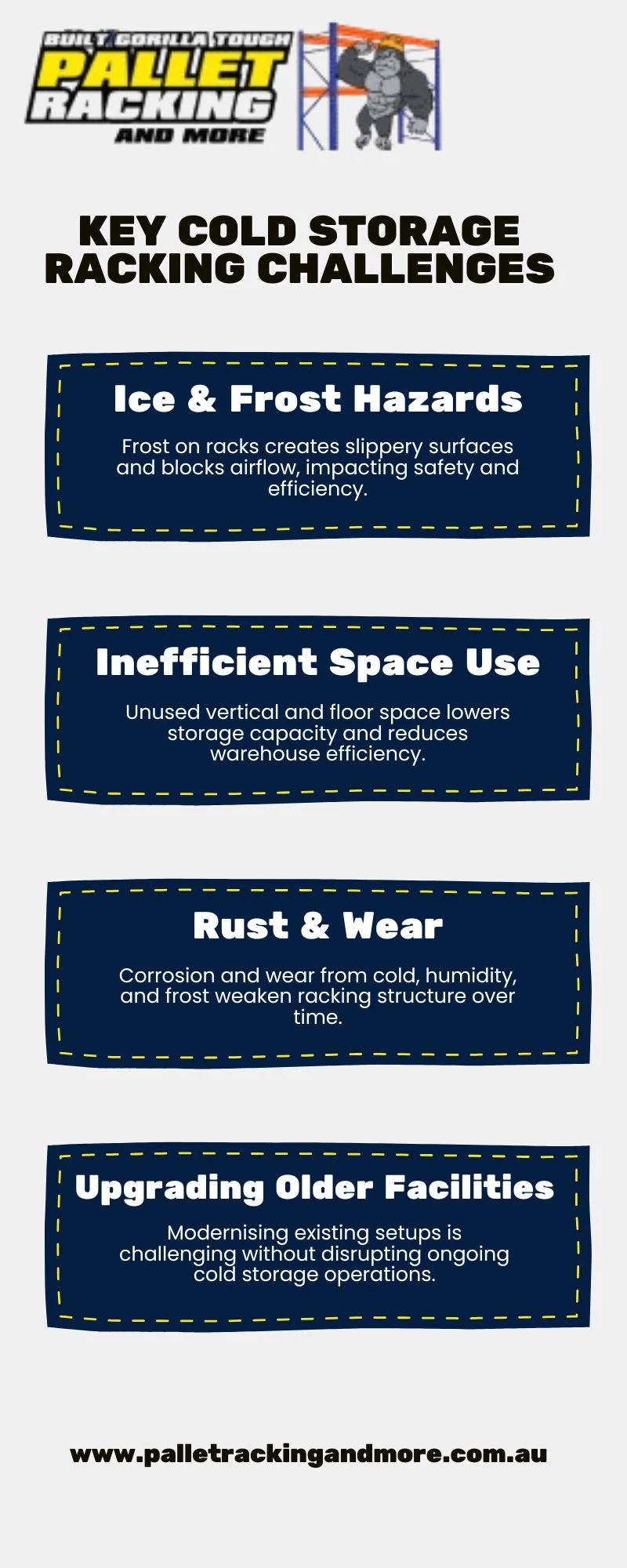
Key Cold Storage Racking Challenges
Conclusion
Selecting the right cold storage racking systems requires balancing density, selectivity, structural integrity, compliance, and long-term operating cost. From heavy-duty warehouse racking to high-density freezer racking, each configuration offers trade-offs between throughput and space efficiency. Optimised layouts improve workflow, enhance safety, and reduce refrigeration energy per pallet. Compliance with AS 4084.1:2023 and Safe Work Australia guidance is non-negotiable.
FAQs
Can cold storage racking be installed in an existing warehouse?
Yes. However, the warehouse slab, insulation, vapour barrier, and refrigeration system must be assessed first. A structural engineering review is required to confirm load capacity and anchoring suitability before converting to freezer use.
How does condensation affect freezer racking safety?
Condensation can freeze on beams and pallets, creating ice build-up that increases slip risk and reduces pallet stability. Proper airflow design, humidity control, and door management reduce this hazard.
Why is pallet standardisation important in high-density freezer racking?
Uniform pallet dimensions improve compatibility with shuttle, drive-in, and push-back systems. This reduces loading errors, increases lane efficiency, and improves storage density.
How does ceiling height impact freezer warehouse efficiency?
Higher ceilings allow greater vertical cube utilisation, increasing storage capacity. However, airflow distribution and refrigeration performance must be engineered to avoid temperature stratification.
Does cold temperature affect the strength of steel racking?
Yes. Sub-zero temperatures can alter steel performance, particularly if the material is not rated for freezer environments. Cold-rated steel and corrosion-resistant coatings help maintain structural reliability and safety compliance.