In any warehouse or distribution centre, the right workbench can quietly transform daily operations. From packing to assembly, a well-designed industrial workbench improves workflow, boosts safety, and supports long-term efficiency. Get it right, and your workstation becomes a productivity engine, not just a table.
What Is a Workbench?
A workbench is more than a flat surface. In an industrial setting, it is a purpose-built workstation designed to support packing, assembly, repairs, kitting, and material handling tasks.
An industrial workbench typically features a strong steel frame, a durable worktop, and optional storage such as drawers, cabinets, or shelving. Unlike a simple workshop bench, a warehouse workbench must handle higher loads, constant use, and integration with broader storage systems.
Think of it as the command centre for hands-on operations. Whether it’s an assembly workbench on a production line or a packing bench in an order fulfilment packing station, it anchors workflow in a defined, organised space.
Modern workbenches can be fixed, mobile, height-adjustable, or modular. Many are designed as complete industrial workbench systems, integrating lighting, tool storage, racking, and shelving to create a fully functional workstation bench.
Why Workbenches Matter in Warehouses and Distribution Centres
Efficiency in a warehouse doesn’t happen by accident. It’s built into the layout, one workstation at a time.
A properly specified warehouse workbench reduces unnecessary movement, shortens task times, and keeps tools and materials within reach. That translates directly into better throughput and improved labour productivity. When positioned correctly, a distribution centre workbench supports smoother picking, packing, and dispatch processes.
Workbenches also play a critical role in overall warehouse efficiency. When packing stations are stable, organised, and ergonomically designed, errors decrease, and output improves. For a deeper look at how layout influences productivity, explore strategies for improving warehouse efficiency.
From a safety perspective, a stable heavy-duty industrial workbench reduces the risks associated with makeshift packing tables or overloaded surfaces. Structurally sound benches support heavy loads without flexing, shifting, or collapsing.
In short, a commercial workbench is not just furniture. Its operational infrastructure, just as critical as racking, shelving, or forklifts.
Types of Workbenches for Industrial and Warehouse Use
Choosing the best workbench for warehouse operations depends on task demands, load requirements, and workflow design.
Heavy-Duty Workbenches (High Load Capacity)
A heavy-duty workbench is built for strength. These benches feature reinforced steel frames and thick worktops capable of supporting heavy components, equipment, or tools.
A heavy-duty workbench is ideal for fabrication, repairs, and industrial assembly table applications. In distribution centres handling bulky items, a heavy-duty industrial workbench provides the structural reliability required for demanding tasks.
Packing and Assembly Benches
An industrial packing bench or commercial packing bench is designed specifically for order fulfilment. These packing tables often include shelving above the bench, carton storage below, and accessories such as tape holders or label rails.
In fast-moving environments, a warehouse packing station or logistics packing bench keeps everything within arm’s reach. An industrial assembly table, on the other hand, supports structured production line work, often as part of an assembly line workstation.
Height-Adjustable Workbenches
A height-adjustable workbench supports ergonomic flexibility. Workers can adapt bench height to suit sitting or standing tasks, reducing fatigue.
An ergonomic workbench improves posture and minimises strain. In environments with multiple operators, an adjustable workbench provides flexibility without compromising stability.
Mobile Workbenches (With Castors)
Mobile benches add flexibility. Fitted with lockable castors, a metal workbench can move to where work is required. This is especially useful in kitting workstation setups or temporary production workstation zones.
Modular and Custom-Built Workstations
A modular workbench or modular workstation system allows facilities to scale operations easily. Components such as shelving, pegboards, and cabinets can be added as needs evolve.
For example, combining a workbench with shelving or integrating it with long-span shelving creates a scalable layout. Learn more about how longspan shelving supports flexible workstation design.
When off-the-shelf options don’t meet requirements, a custom industrial workbench delivers a tailored solution for specialised processes.
Key Benefits of Industrial Workbenches
Improved Productivity and Workflow
An organised workstation bench reduces wasted motion. Tools stay in fixed positions. Materials flow logically. Tasks move faster.
Better Space Utilisation
A workbench with storage—such as drawers, cabinets, or integrated shelving—maximises vertical and under-bench space. Instead of scattered supplies, everything sits within a defined footprint.
Enhanced Safety and Ergonomics
An ergonomic packing bench supports safe manual handling workstation practices. Stable frames prevent wobble. Proper height reduces bending and strain.
Increased Durability and Longevity
A steel workbench or metal workbench is built to last. Powder-coated frames resist corrosion, while reinforced tops handle daily impact. A quality industrial duty workbench can perform reliably for years.
Integration with Storage and Racking Systems
Modern warehouse workstation setups often include a workbench with racking or shelving above. An integrated storage workbench reduces travel time and supports lean workbench system principles.
When workbenches function as part of a complete industrial workstation with shelving, productivity gains compound across the facility.
How to Choose the Right Workbench for Your Facility
Selecting the right industrial workbench requires a structured approach.
Assess Load Requirements and Usage
Start with load capacity. What is the maximum weight the bench must support? A heavy-duty workbench for distribution centre operations may require significantly higher capacity than a light packing table.
Always choose a bench rated above your expected load. This ensures long-term structural integrity.
Measure Available Floor Space
Map out your warehouse workbench layout carefully. Account for operator movement, pallet access, and equipment clearance. Avoid cramming benches into tight zones that restrict workflow.
Consider Workflow and Process Flow
Analyse how goods move. A workbench for order picking and packing should sit close to shelving and dispatch lanes. A production line workbench should align with upstream and downstream processes.
The goal is to reduce walking time and unnecessary handling.
Select the Right Worktop Material
Worktop choice depends on use. Hardwood suits the general assembly. Laminated tops resist impact. Stainless steel works well in hygiene-sensitive environments. ESD workbench surfaces protect electronics.
Match material to task.
Evaluate Storage Integration Options
Consider whether you need a workbench with drawers, a workbench with cabinets, or a workbench with pegboard panels for tools. An industrial packing bench with storage improves efficiency by centralising supplies.
An industrial workbench system with overhead shelving transforms a basic bench into a complete warehouse packing workstation.
Check Compliance and Safety Standards
Ensure the bench meets relevant industrial workstation design standards. Stability, load rating, and safe manual handling considerations are non-negotiable.
If positioned near racking, confirm alignment with established racking safety guidelines. Compliance protects both personnel and operations.
When evaluating workbenches for sale, work with a reputable industrial workbench supplier or workbench manufacturer that provides documented load ratings and compliance assurance.
Workbench Materials and Surface Options Explained
Steel Frames
A steel workbench offers strength and durability. Powder-coated steel resists rust and handles high-load environments. It forms the backbone of most heavy-duty industrial workbench designs.
Hardwood and Laminated Tops
Hardwood tops absorb impact and are suitable for general assembly table tasks. Laminated surfaces resist scratches and light chemical exposure, making them ideal for packing table applications.
Stainless Steel Surfaces
Stainless steel suits environments requiring hygiene control. These surfaces are easy to clean and corrosion-resistant.
ESD-Safe Work Surfaces
An anti-static workbench protects sensitive electronic components. ESD workbench surfaces dissipate static charges safely, reducing the risk of product damage.
Chemical-Resistant Finishes
For workshops handling solvents or oils, chemical-resistant coatings extend surface lifespan. Selecting the right finish ensures your industrial table withstands daily exposure.
How to Optimise Warehouse Layout with Workbenches
Workbenches should never sit randomly on the floor. Placement drives performance.
Positioning for Efficient Picking and Packing
Place a warehouse packing station close to high-turnover inventory. The shorter the travel path, the faster the throughput. Think of it like setting up a kitchen—everything should be within reach.
Integrating with Racking and Shelving Systems
Workbenches perform best when integrated with storage. Position benches alongside warehouse shelving systems to create seamless picking zones.
A workbench and shelving system allows operators to retrieve items, assemble, and pack without leaving their station.
Creating Dedicated Assembly Zones
Define clear assembly workstation areas. Separate packing from fabrication to reduce congestion. A production workstation should support focused tasks without cross-traffic interference.
Allowing Safe Access and Aisle Clearance
Maintain adequate aisle widths for trolleys and pallet jacks. Ensure the industrial workstation design supports safe movement around benches.
Planning for Future Expansion
Growth changes space demands. Leave room to add additional modular warehouse workstation system components. Consider vertical expansion using mezzanine systems where appropriate. Learn more about scalable design with mezzanine systems.
A flexible warehouse workstation setup prevents costly reconfiguration later.
Safety and Compliance Considerations
Manual Handling Risk Reduction
An ergonomic packing bench reduces bending and overreaching. Proper height and layout reduce lower-strain injuries.
Load Capacity and Structural Stability
Never exceed rated capacity. A heavy-load workbench must maintain structural integrity under full load without deformation.
Ergonomic Setup Best Practices
Keep frequently used items between shoulder and waist height. Use adjustable workbench features where possible. Encourage neutral posture.
Industry Regulations and Inspection Requirements
Workstations positioned near racking systems must align with recognised racking safety guidelines. Review applicable racking safety guidelines to ensure full compliance.
Regular inspections should confirm structural integrity and safe positioning.
Maintenance and Routine Checks
Inspect welds, bolts, and castors regularly. Replace damaged surfaces promptly. A proactive maintenance approach extends the lifespan of any industrial workstation with shelving or storage attachments.
Workstations positioned near racking systems must align with recognised racking safety guidelines and legal requirements for hazardous materials. For guidance on warehouse safety and compliance with the Australian Dangerous Goods (ADG) Code.
Custom vs Standard Workbenches: Which Is Better?
Advantages of Standard Models
Standard commercial workbench models are cost-effective and readily available. For straightforward packing or assembly needs, they deliver fast deployment and predictable performance.
When Custom Solutions Make Sense
A custom industrial workbench suits specialised workflows. If you require integrated scales, conveyor interfaces, or unique dimensions, custom packing bench solutions may provide better operational alignment.
Cost Comparison and ROI Considerations
While custom units cost more upfront, they may reduce inefficiencies long term. The decision should focus on ROI, not just purchase price.
When evaluating whether to buy industrial workbench solutions, compare durability, integration capability, and operational impact.
A custom industrial workbench suits specialised workflows. If you require integrated scales, conveyor interfaces, or unique dimensions, custom heavy-duty workbenches from Australian suppliers can provide better operational alignment.
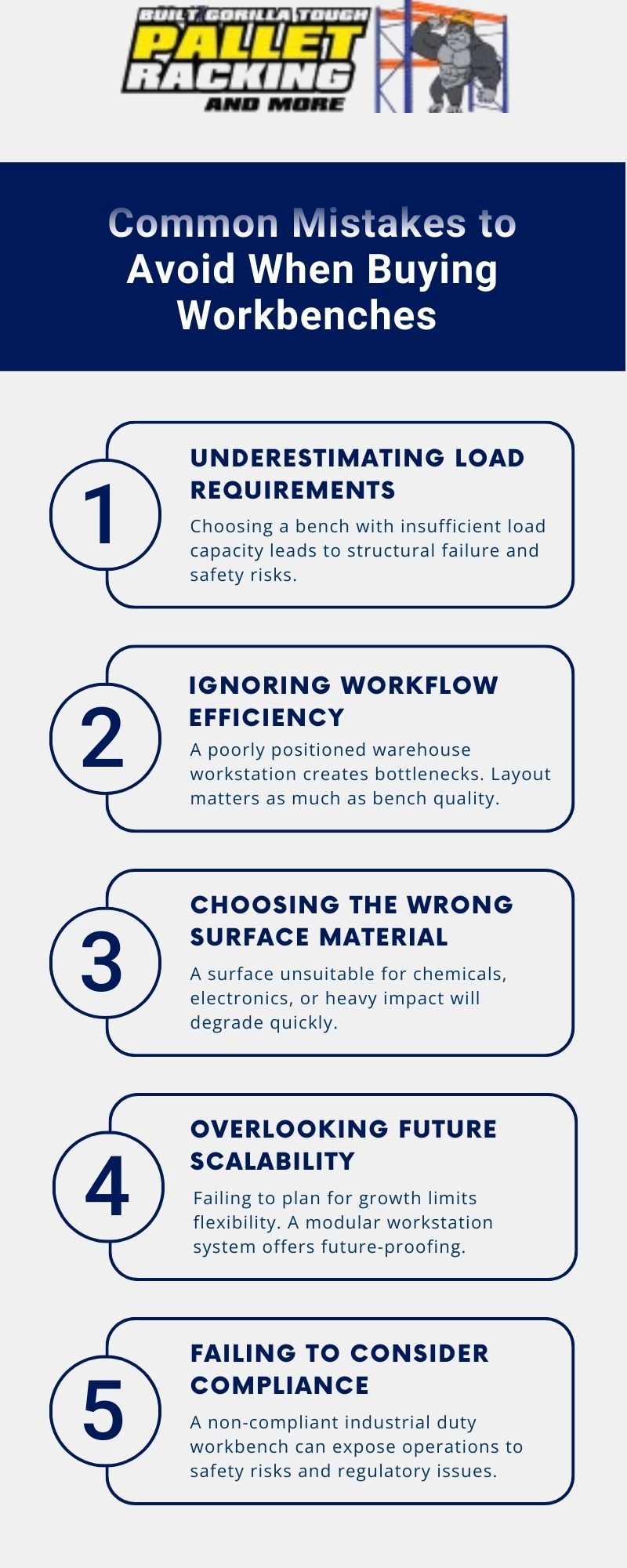
Common Mistakes to Avoid When Buying Workbenches
How Workbenches Improve Packing and Assembly Efficiency
Reducing Travel Time Between Tasks
An organised order fulfilment packing station keeps cartons, labels, and tools within arm’s reach. Reduced travel means faster output.
Organising Tools and Materials
A tool storage workbench or workbench with drawers prevents clutter. Operators spend less time searching and more time working.
Supporting Lean and 5S Principles
A lean workbench system aligns with 5S methodology sort, set in order, shine, standardise, sustain. Clear zones reduce waste and variation.
Minimising Errors and Rework
Defined workspaces reduce mix-ups. A structured kitting workstation supports accurate order assembly, lowering returns and rework costs.
Over time, even small workflow improvements compound into measurable gains.
Cost of Industrial Workbenches: What to Expect
Factors That Affect Pricing
Cost varies based on load capacity, materials, size, and integrated storage. A basic packing table costs less than a fully integrated industrial workbench system.
Budget vs Heavy-Duty Investment Options
Entry-level benches suit light tasks. Heavy-duty workbench models cost more but withstand constant industrial use.
Long-Term Value and ROI
A durable steel workbench reduces replacement costs and downtime. When evaluating workbenches for sale, consider lifespan, warranty, and productivity impact, not just price.
FAQs
What weight capacity should a warehouse workbench support?
It depends on task demands. Light packing may require a 300–500 kg capacity. Heavy fabrication may exceed 1,000 kg. Always select a heavy-duty industrial workbench rated above the expected load.
Are height-adjustable workbenches worth the investment?
Yes. A height adjustable workbench improves ergonomics and reduces fatigue, especially in multi-user environments.
Can workbenches be integrated with pallet racking systems?
Yes. Many designs include workbench with racking configurations, creating efficient picking and packing zones.
What is the best worktop material for packing stations?
Laminated or hardwood tops suit most packing tasks. Stainless steel suits hygiene-sensitive operations.
How much space should be allocated per workstation?
Allow enough clearance for operator movement and equipment access. Typically, 1.5 to 2 metres of working width is recommended.
Do industrial workbenches require regular inspections?
Yes. Conduct periodic checks for structural stability, especially for heavy-load workbench units.
Are mobile workbenches suitable for busy warehouses?
Yes, provided castors are lockable and rated for load capacity.
How long do heavy-duty workbenches typically last?
A high-quality steel or metal workbench can last many years with proper maintenance, often exceeding a decade in active industrial environments.