
Ensure your warehouse meets safety standards with our professional racking safety audits. We inspect, identify risks, and provide solutions to keep your storage secure.
Any racking used in the workplace should be designed specifically for the size, shape, and weight of the products being stored to maintain pallet racking safety.
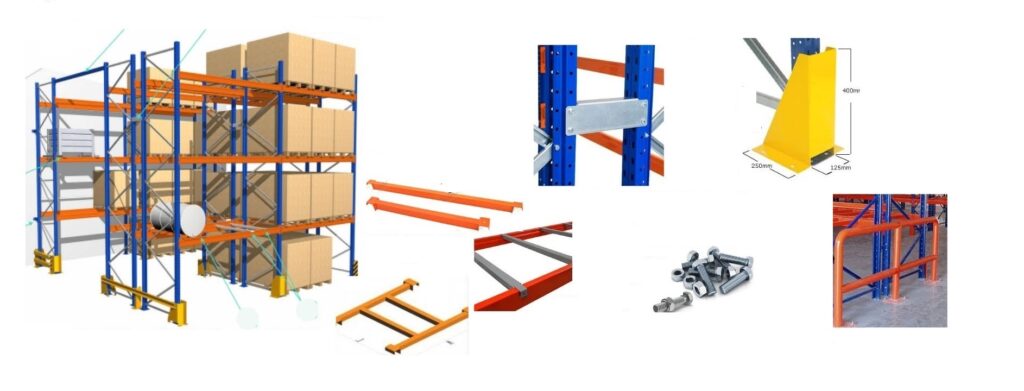
This advice is for persons conducting a business or undertaking (PCBU), including those with management or control of a workplace and workers.
This includes individuals responsible for racking, warehouse and maintenance operations, training organisations, forklift operators, storepersons, and health and safety representatives.
This fact sheet provides guidance for standard pallet racking. Additional safety measures may be required for cantilever, drive-in, double-deep, pallet-live, push-back, or other specialised types of racking to meet the required racking safety standard.
Information has been adapted from WorkSafe Victoria’s guidance note: pallet racking operation and maintenance.
Ensure your warehouse safety and compliance with a professional pallet racking inspection. Schedule your audit today for peace of mind and optimal performance.Contact our storage specialists for a free consultation. Call us or email now to discuss your space, requirements, and customized storage solutions.
Any racking used in the workplace should be designed specifically for the size, shape, and weight of the products being stored.
All racking must be set up and maintained according to the manufacturer’s instructions.
The layout should:
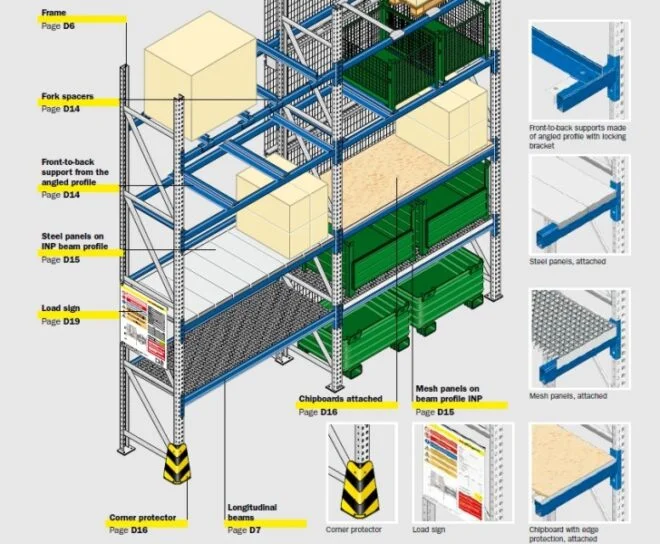
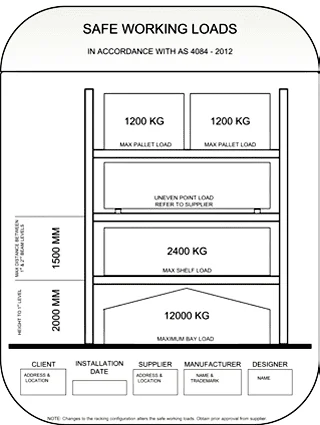
There are two critical rated capacities related to racking and they should never be exceeded:
A unit load is an individual stored item that can be handled in one operation. The total weight of all unit loads on a bay must not exceed the bay’s rated capacity.
A unit load is an individual stored item that can be handled in one operation. The total weight of all unit loads on a bay must not exceed the bay’s rated capacity.
Clear signage should always display this information visibly on the racking. There should also be a way to determine the weight of each unit load.
Procedures must ensure safe operations related to racking systems, load management, and lifting equipment. At a minimum, they should include clearly defined guidelines for the correct use of handling equipment, strict adherence to rated racking load capacities, complete prohibition of any unauthorised modifications or structural alterations, and a formal damage reporting and inspection process to ensure hazards are identified and addressed promptly before any safety risk occurs.
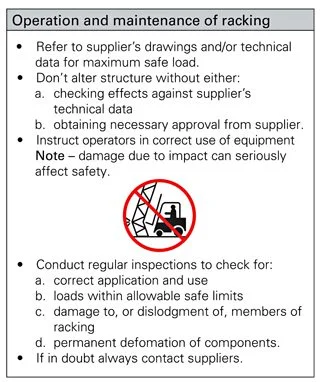
Any modifications or adjustments must only be carried out by a competent and authorised person, supported by complete technical documentation and full supplier or manufacturer information. All proposed changes must receive prior written approval from the original manufacturer, approved supplier, or a qualified structural engineer to ensure compliance with safety and design standards.
Physical alterations such as welding, drilling, cutting, or the attachment of additional cleats, bearers, or components are strictly prohibited, as these actions can compromise structural integrity. Only original manufacturer-approved parts must be used for repairs or replacements. Where alternative components are unavoidable, a certified engineering assessment and formal compatibility report must be provided to verify safety, load performance, and structural suitability before installation.
Where pedestrian access is permitted at the rear of single-row racking systems, suitable and compliant rear protection systems must be installed to prevent goods, pallets, or stored materials from dislodging or falling from the back of the racking structure. These protective measures must be specifically designed to provide effective physical containment, significantly reduce the risk of falling objects, and safeguard the health and safety of personnel who may be moving, working, or operating in these areas. Appropriate safety solutions such as rear barriers, steel mesh panels, netting systems, or engineered back stops should be properly installed and maintained to create a controlled, secure, and hazard-free environment. All protection systems must comply with applicable workplace safety standards, industry regulations, and risk management requirements to ensure long-term operational safety and regulatory compliance.
All racking-related safety hazards, defects, or risks must be reported immediately through the appropriate workplace reporting channels. In the event of major structural failures, collapses, or situations presenting serious and immediate danger, SafeWork NSW must be contacted without delay at (13 10 50) to ensure rapid regulatory response and emergency risk management.
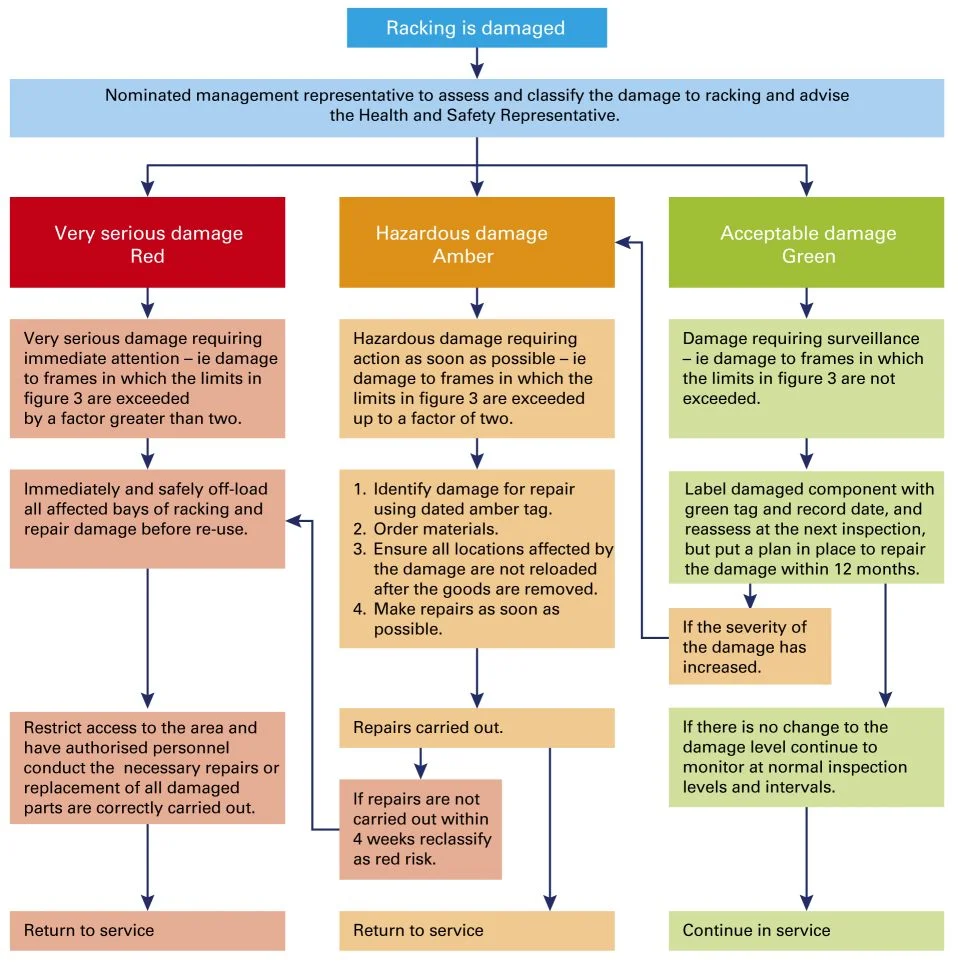
All workers and operators are required to report any visible damage, impact marks, deformation, or instability in racking systems to their supervisors or safety officers for formal inspection and assessment as part of routine pallet and racking safety audit processes. A structured damage identification and reporting system must be implemented, including the use of tagging methods such as coloured labels, stickers, or coded markers to clearly indicate the location, severity, and risk level of the damage. This ensures that hazards are easily identifiable, tracked, prioritised, and rectified in a timely manner to maintain a safe working environment and regulatory compliance.
Racking design must be fully compatible with the pallet type, load configuration, and material handling requirements used within the facility. All changes to pallet types or load formats must be carefully assessed through a formal risk evaluation process to ensure safe load distribution, stability, and structural integrity. For example:
Note: Overseas-manufactured pallets often differ in dimensions, structural design, and load capacity, and may not be compatible with standard Australian racking systems. All imported pallet types must be assessed for fit, load performance, and safety compliance before being introduced into the racking environment.
Yeh lo bhai, isko bhi same structure + expanded + safety-audit standard style mein bana diya:
Employers must actively identify, assess, and manage the risks associated with plant, vehicle, and equipment collisions with personnel, racking systems, and structural elements within the workplace. A formal traffic management and pedestrian safety plan must be developed, implemented, and regularly reviewed to control movement patterns and reduce collision risks. This plan must include the installation of appropriate physical protection systems, such as:
These protective devices must be fitted to all exposed frame bases and vulnerable racking structures to absorb impact forces, prevent structural damage, and minimise the risk of injury to personnel. All protection systems must be correctly installed, routinely inspected, and maintained in accordance with manufacturer specifications, workplace safety standards, and regulatory compliance requirements to ensure long-term operational safety and risk control.
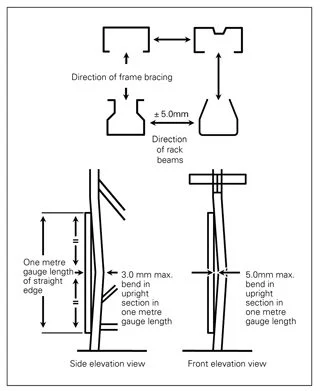
Racking must be inspected regularly under AS 4084: Steel Storage Racking to ensure it remains safe and compliant with the racking safety standard.
For detailed regulatory compliance, technical guidance, and best-practice requirements, all racking, pallet, and storage system operations must align with the relevant Australian Standards. These standards provide authoritative frameworks for design, safety, load performance, dimensions, tolerances, and operational control, and must be used as primary reference documents for compliance and risk management:
`All relevant personnel must ensure these standards are understood, referenced, and applied in system design, installation, operation, inspection, and safety audits to maintain full regulatory compliance and long-term operational safety.
Please fill out the form now and let us handle your Pallet needs with ease.

Big things are on the way… stay tuned in!