Drive-in pallet racking is a popular choice for warehouses that need high-density storage without increasing floor space. This pallet racking system can store up to 75% more pallets as compared to conventional selective racking by eliminating extra aisles and utilising deep lanes effectively. Many businesses in Australia use this system because it helps store large volumes of similar products in a simple and organised way.
Warehouses that handle bulk goods, seasonal stock, or products with long shelf lives benefit most from this layout. It supports FIFO and LIFO methods, depending on the design, and maintains inventory in a safe, stable, and easily accessible manner.
This guide explains how drive-in pallet racking works, why it is useful, and what to consider when choosing a drive-in racking system design for your warehouse.
What Is Drive-In Pallet Racking?
It is a storage system with deep storage lanes that allow forklifts to move directly inside the rack structure. Pallets sit on support rails instead of beams. This creates more room for vertical and horizontal storage.
The system works best when the warehouse needs to store many pallets of the same product. It is a high-density pallet racking layout because it uses every bit of space by removing extra aisles.
How Drive-In Pallet Racking Works
Forklifts enter the storage lane
The operator positions the forklift and the special entry lane (with floor markings or rail guides to follow the correct position). The forklift will hit the deep lane within the rack structure and press the pallet to the correct height on its forward progress.
Pro Tip: Always enter slowly and ensure the lane is clear to avoid collisions.
Loading and Pallet Positioning:
When the pallet is deep enough, the forklift lifts the pallet and places it on support rails (as opposed to traditional beams). The loading of pallets is done from back to front, sliding into place.
Filling The Lane and Stacking Vertically:
The cycle starts again, filling the lane at its deepest point to the outer, and pallets are placed at various levels on top of one another. This produces thick rows that suit high-volume products that are similar. In drive-through varieties (FIFO), the loading occurs on one side and the unloading on the other.
Pallet Unloading:
In a regular drive-in (LIFO), the process of unloading begins at the front: the forklift enters it, removing the last loaded pallet first, and the rest of them stand stably on the rails. This applies to non-perishable bulk goods.
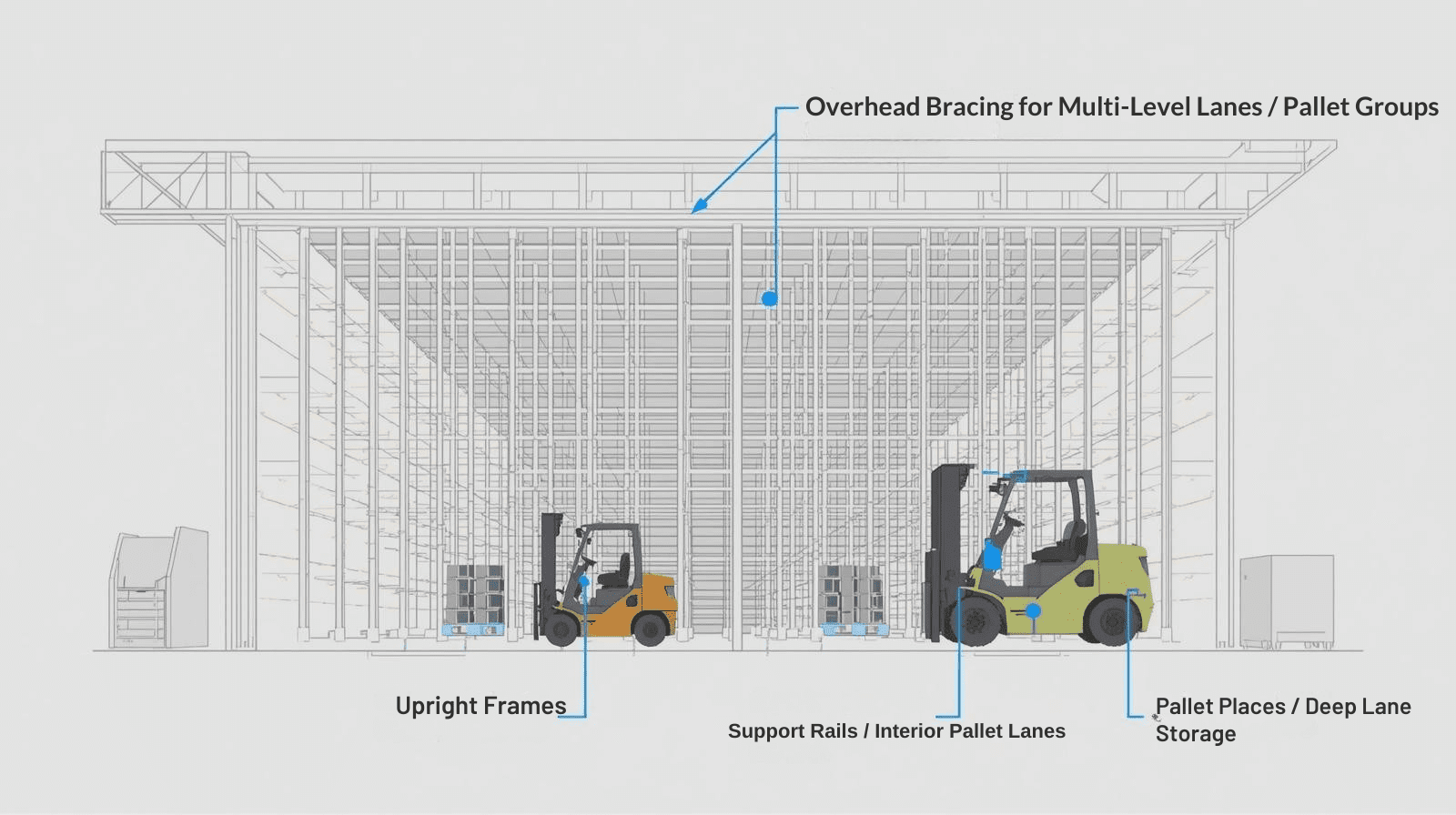
This layout supports high-volume stock and fast loading when the warehouse follows a simple movement pattern.
Why Australian Warehouses Prefer Drive-In Pallet Racking
Many Australian warehouses choose drive-in racking because it saves cost, increases storage room, and supports bulk product handling. Land in Australia is expensive, especially in major cities. A pallet racking system that increases vertical space helps businesses avoid expanding their building footprint.
Industries And Facilities That Benefit From Drive-In Pallet Racking
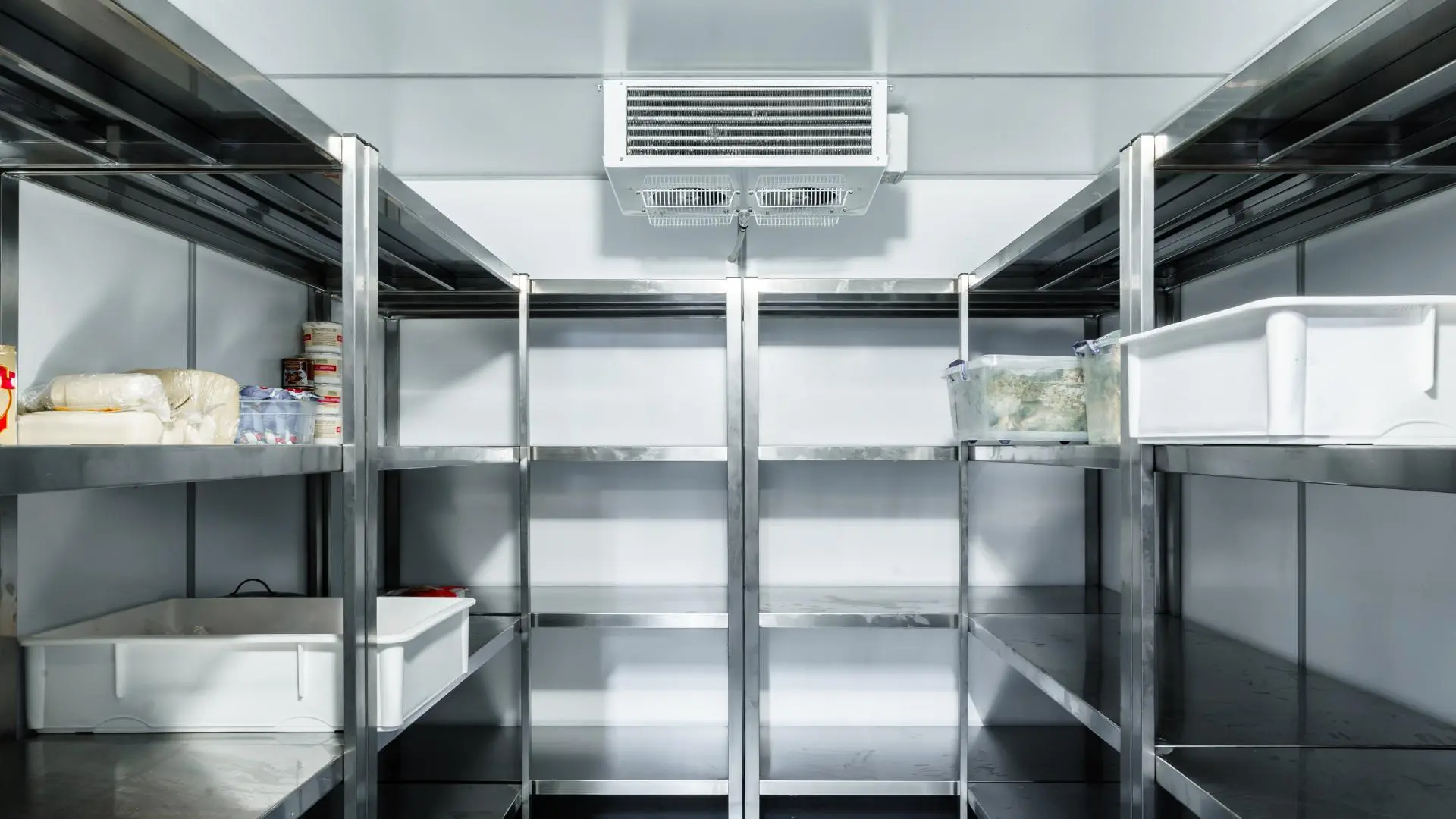
Cold Storage And Freezer Rooms
The system lowers cooling costs and helps store large quantities of frozen food.
Food And Beverage Warehouses
Bulk packaging and seasonal goods fit well in deep storage lanes.
Industrial And Building Supply Storage
Heavy products with long shelf life stay safe and organised.
Automotive Part Distribution
Bulk car parts stored in large batches benefit from high-density storage.
Wholesale And Import Businesses
Loads of identical goods stay grouped, which improves loading speed.
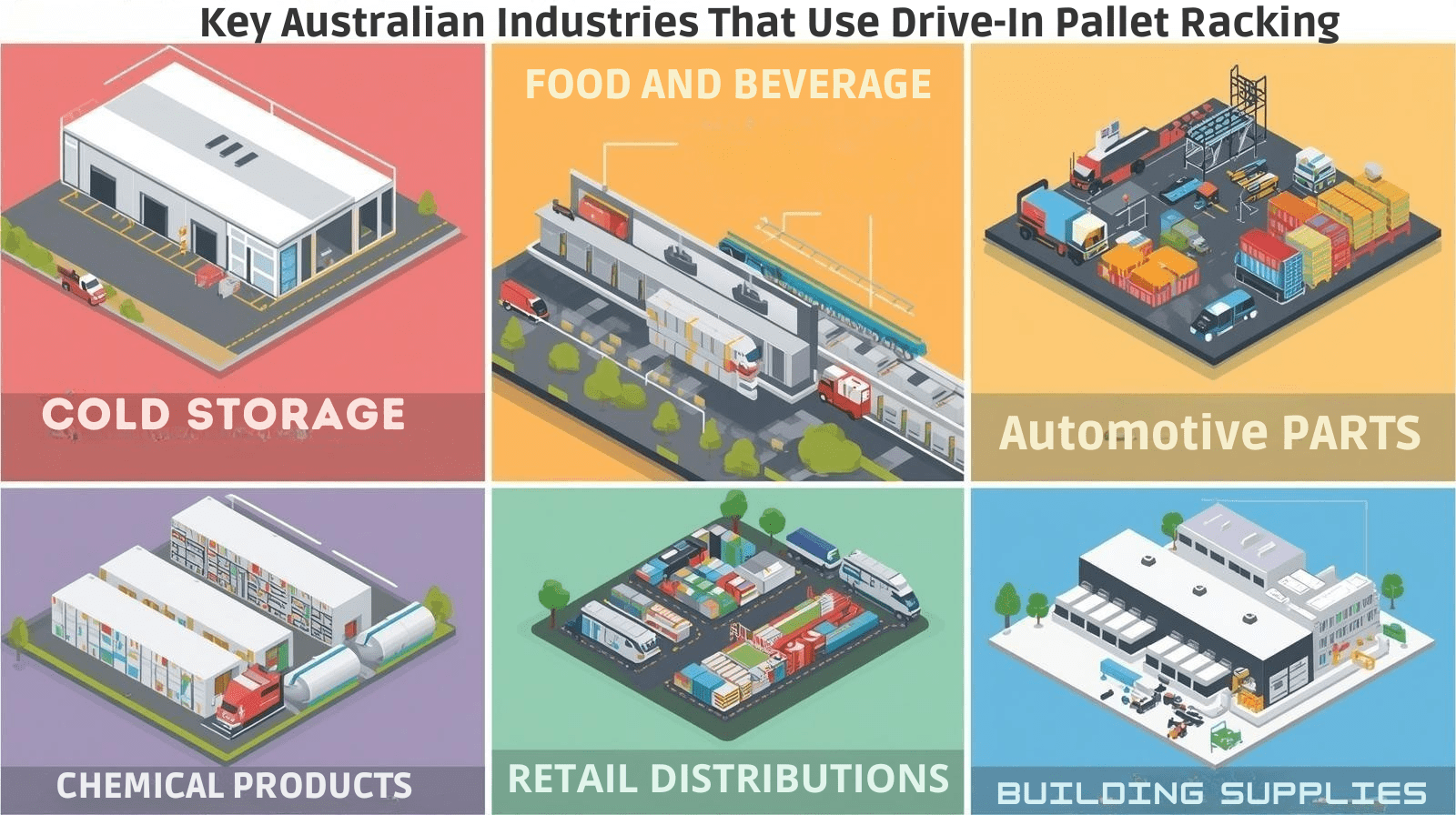
These industries deal with high pallet counts, low product variety, and heavy stock rotation needs, which suit drive-in pallet storage perfectly.
Key Features Of Drive-In Pallet Racking
1. High-Density Storage
Drive-in racking fits more pallets in the same area. It removes aisles and increases the number of pallets stored per square meter.
2. Simple Structure
The system uses support rails rather than beams, which creates deep lanes that are easy to maintain.
3. Good For Bulk Storage
It works well when products have a long shelf life or when the warehouse handles the same product in large volumes.
4. Flexible Height And Depth
The drive-in racking system design is adjustable according to the load size and warehouse layout.
5. Safe And Strong
Made with durable steel and safety locks, the system supports heavy pallets and continuous forklift movement.
Types Of Drive-In Racking System Design
Drive-in pallet racking comes in two main designs. Each type supports a different method of stock rotation.
1. Drive-In Racking (LIFO)
- Last In, First Out loading
- One entry and exit point
- Best for goods that do not expire quickly
- Good option for bulk and low-rotation products
2. Drive Through Racking (FIFO)
- First In, First Out loading
- Two entry and exit points
- Suitable for perishable goods
- Used in food, dairy, pharmaceutical, and cold storage
Warehouses choose the design based on how fast inventory moves and how staff handle stock rotation.
Benefits Of High-Density Pallet Racking
Better Space Use
By reducing the number of aisles, the system stores more pallets in the same building.
Lower Storage Cost
Higher density means fewer expansions, lower land expenses, and reduced energy use.
Smooth Forklift Operation
Forklift lanes are designed for easy entry and exit, making daily operations fast and safe.
Stronger Inventory Control
Products are stored in a neat, predictable order, which helps reduce damage and confusion.
Ideal For Cold Rooms
Cold storage facilities prefer this system because it lowers cooling area costs and improves energy efficiency.
Drive-In Pallet Storage Vs. Selective Racking
Below is a simple table to explain how drive-in pallet racking compares with selective pallet racking.
|
Feature |
Drive-In Pallet Racking |
Selective Pallet Racking |
|
Storage Density |
Very High | Medium |
|
Aisles Needed |
Few |
Many |
|
Best For |
Bulk goods, low variety | Fast picking, mixed goods |
| Stock Rotation | LIFO or FIFO |
100 per cent accessibility |
|
Cost Per Pallet Position |
Low |
Higher |
| Ideal Industry | Cold storage, wholesale, bulk supply |
Retail, fast-moving goods |
This comparison shows why many warehouses choose high-density pallet racking when floor space is limited.
Important Considerations Before Choosing Drive-In Pallet Racking
Key factors to consider before installing a Drive-In Pallet Racking:
1. Forklift Type
Some forklifts are wider or taller, so the design must match the equipment used inside the warehouse.
2. Pallet Quality
Pallets must be strong and consistent in size because they slide on support rails inside the structure.
3. Product Rotation
If the stock requires strict FIFO movement, the drive-through system is more suitable.
4. Ceiling Height
Higher ceilings allow deeper storage lanes and multiple levels of pallet storage.
5. Load Capacity
The warehouse must check pallet weight to design a safe and durable layout.
Installation And Safety Tips
Proper Training For Staff
Operators must understand how to enter and exit lanes safely because forklifts move inside the structure.
Regular Rack Inspections
Frequent checks prevent accidents and damage, especially in high-traffic areas.
Use Rack Protectors
Post protectors and guide rails help reduce forklift impact and keep the rack stable.
Safe Pallet Placement
Always place pallets straight on rails to avoid sudden falls or uneven loading.
Clear Floor Markings
Mark entry and exit lanes to guide drivers and reduce mistakes.
Maintenance Checklist
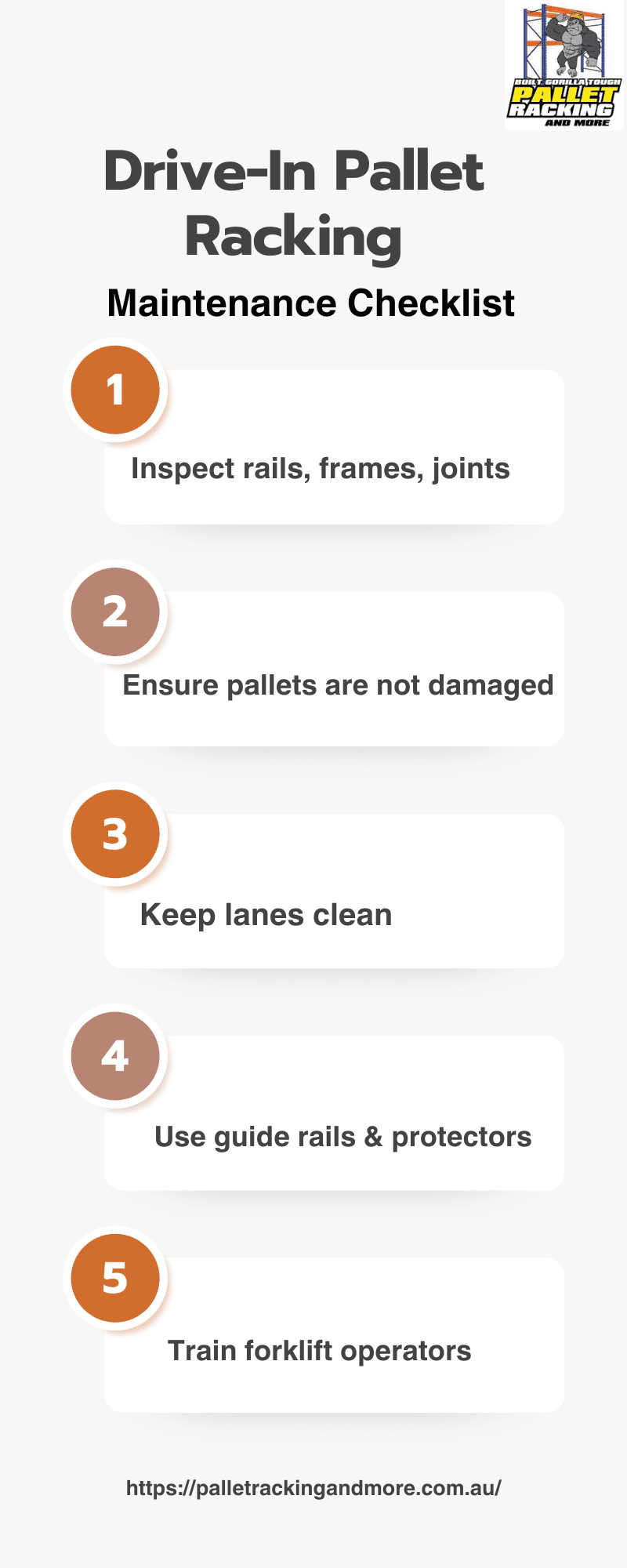
Maintenance Required For Drive-In Pallet Racking
Maintenance supports long-term safety and lowers repair costs.
1. Inspect Rails And Frames
Look for bends, cracks, or damage from forklift impact.
2. Check Pallet Condition
Broken pallets risk falling inside deep lanes.
3. Clean Storage Lanes
Dust and debris reduce smooth pallet movement.
4. Tighten Bolts And Joints
Make sure the system stays firm and steady.
5. Use Guided Entry Systems
Guide rails help drivers align forklifts before entering lanes.
When Drive-In Pallet Racking Is Suitable or Not
Drive-in pallet racking is used in warehouses where it is necessary to focus more on the density of storage than the opportunity to access the pallets directly. It provides good performance when the operating system, type of inventory, and equipment to handle it are in parallel with the shortcomings and strengths of the system.
Where Drive-In Pallet Racking Will Work Best
This system is best suited to large quantities of the same or similar products that are stored in large warehouses and do not need immediate access to all the pallets. It is extremely common in environments where operations directly depend on space, i.e., the direct relationship between space and operating costs.
Drive-in pallet racking suits well in:
- Warehouses process the bulk quantity of pallets.
- Slow or medium stock turnover goods.
- Inventory that is seasonal or in batches.
- Cold storage and freezer rooms where aisle reduction helps to reduce energy expenses.
- Deep storage lanes work in favour of heavy products.
Reducing aisles allows warehouses to have more pallet spaces in the same area and have an organised and constant storage.
Where Drive-In Pallet Racking Is Inappropriate
Drive-in pallet racking is not ideal in all activities within the warehouse, despite its space-saving features. This system may be limiting to businesses that need speed, flexibility, or visibility of the entire pallet.
- The drive-in pallet racking might not be appropriate when:
- The warehouse keeps a large variety of products.
- Picking individual pallets quickly is needed.
- Without the drive-through layout, strict FIFO stock rotation is very necessary.
- The operation requires direct access to all the pallet locations.
When such scenarios occur, other systems like selective pallet racking or the use of double-deep pallet racking have higher accessibility and operational flexibility, even though their storage density is lower.
If you want reliable and safe drive-in pallet racking for your warehouse, visit Pallet Racking and More for professional guidance, durable designs, and high-quality storage solutions for every industry.
Conclusion
Drive-in pallet racking is a strong and reliable choice for warehouses that need high-density storage and organised product handling. It improves space use, lowers storage costs, and supports bulk stock simply and efficiently.
When a warehouse selects the right pallet racking system, it improves daily work, supports long-term growth, and keeps inventory secure. Drive-in pallet racking provides these benefits by turning unused space into a productive and well-organised storage area. If your warehouse needs a stronger and more efficient storage method, this system offers a dependable path toward better performance and better use of space.
FAQs
What is drive-in pallet racking used for?
It is used to store large numbers of similar pallets in a deep lane system. It suits warehouses that need high-density storage without extra floor space.
How does drive-in racking save space?
It removes most aisles and stacks pallets in deep rows. This increases storage capacity and supports bulk product handling in the same building footprint.
What is the difference between drive-in and drive-through racking?
Drive-in uses one entry point and follows the LIFO method. Drive-through has two entry points and follows FIFO, which suits products with expiry dates.